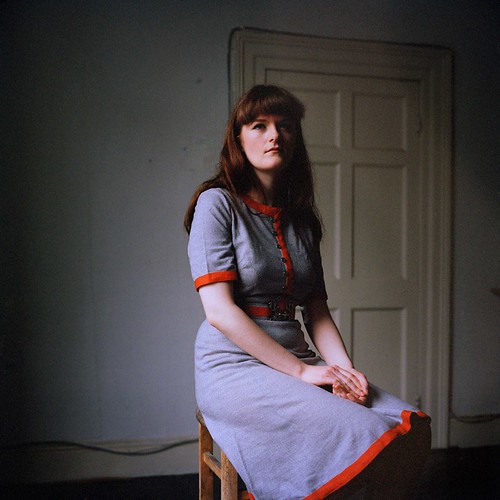
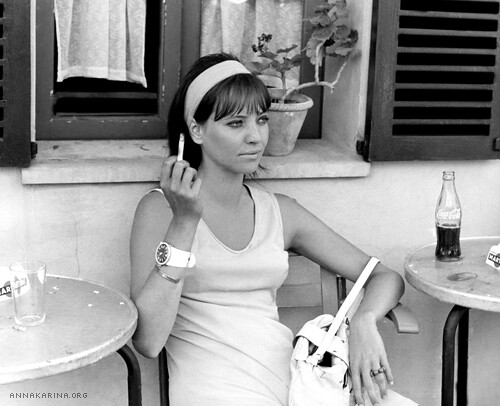
A portrait taken of me by photographer Kate Nolan in April 2014. See the other photos in her project here.
Blogging will recommence at some point.
In the meantime, find me on instagram.


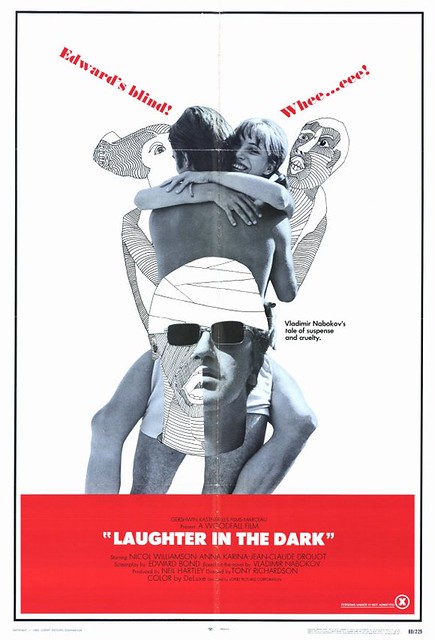
'Edward's blind! Whee...eee!'
Nabokov's book was published in Paris, in 1933 in his native Russian under the title of Kamera Obskura. The author's own English version, under the title of Laughter in the Dark was published in the USA in 1938, and published in the UK in 1961.
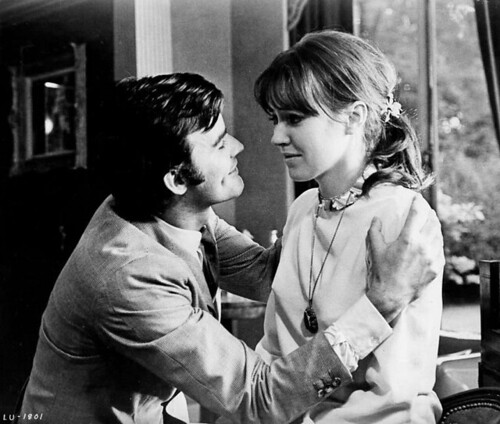
The film, now lost, was directed by Tony Richardson, then the David Bailey of the silver screen, who made his mark with gritty British dramas such as A Taste of Honey (1961) and The Loneliness of the Long Distance Runner (1962). It appears that the dramatic action is taken from 1930s Berlin to the 1960s (present day, when it was released in 1969). This suspenseful story of an unexpected menage á trois, concludes with devastating consequences.

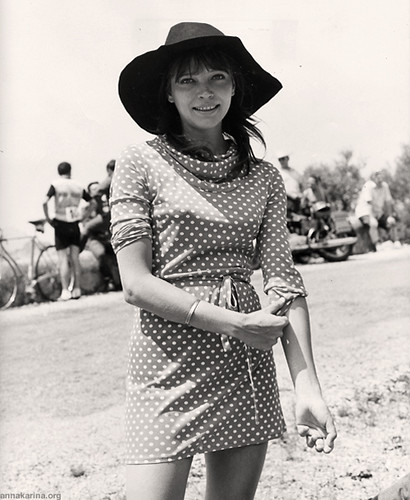
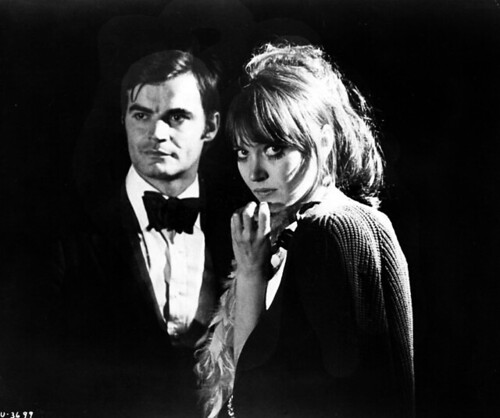
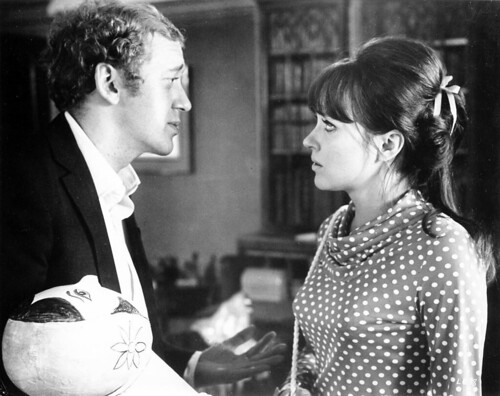
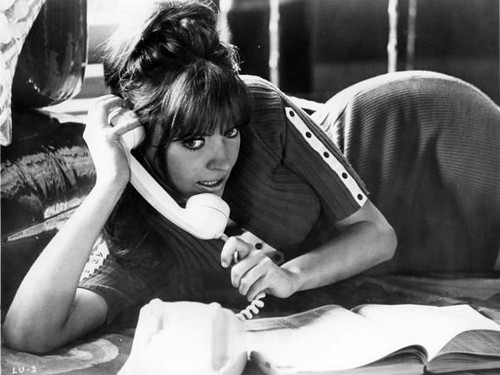
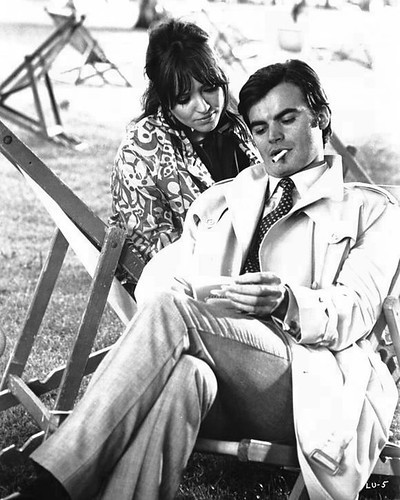
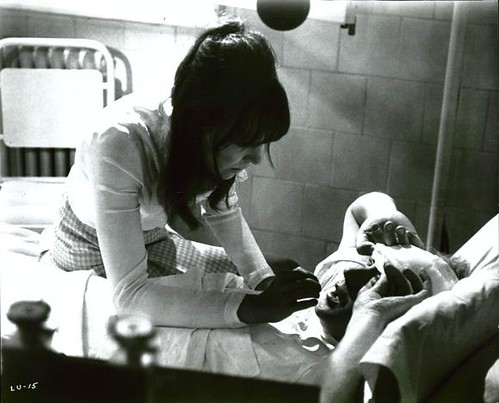
Anna Karina on the set of 'Laughter in the Dark' (1969)
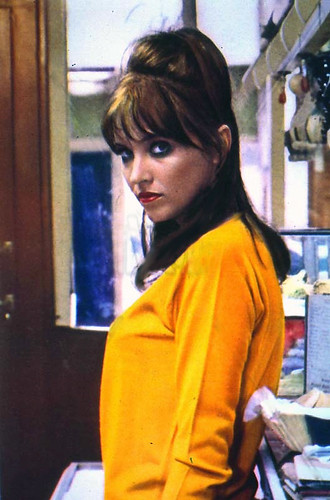
Anna Karina plays the lead fille fatale role of the precocious teenager Margot. Born in Copenhagen, Denmark in 1940, Anna Karina was the original indie IT girl, beginning her career in Paris at 18, as a model for Chanel and Pierre Cardin, before her foray into film with some bit parts, until she met and later married the French new wave director Jean-Luc Godard, and the rest is cinema history.

'A vulgar little Berlin girl'
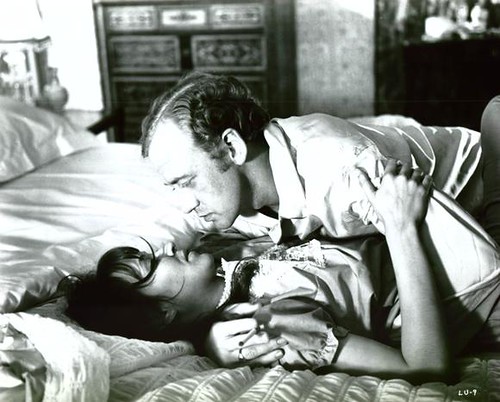
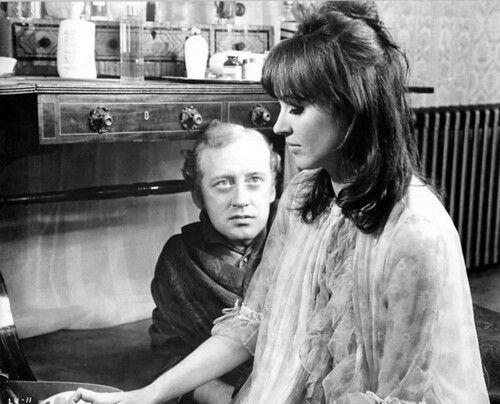
The mystery of the film's disappearance has intrigued me for a couple of years, and fascinated by the plot, I had intended to read the book ever since. Last autumn, I came across a 1960s Penguin copy of the Nabokov novel in a charity shop and finally got around to reading Nabokov's incredibly visual story. The use of images from the film enhances its mystique for me, we'll never see this drama unfold onscreen. I've included excerpts below, with official stills from the film, in an attempt to piece together what the screen version may have been like.

1969 Penguin cover

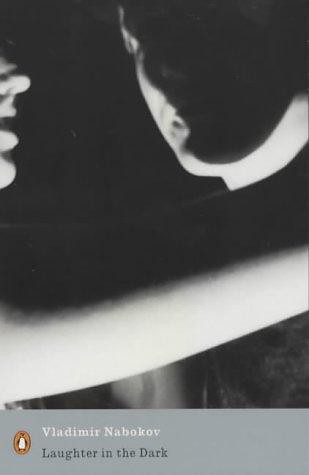
2001 Penguin Classics cover, using what appears to be a scene from the 1969 film, as seen below

"Hardly had he entered the velvety darkness when the oval beam of an electric torch glided towards him (as usually happens) and no less swiftly and smoothly led him down the dark and gently sloping gangway. Just the light fell on the ticket in his hand, Albinus saw the girl's inclined face and then, as he walked behind her, he dimly distinguished her very slight figure and the even swiftness of her dispassionate movements." (Nabokov, 13)

"And she liked Miller enormously. There was something so satisfying about the grip of his hands, the touch of his thick lips. He did not speak to her much, but her often held her on his knees and laughed quietly as he mused over something unknown." (23)

"He kept discovering new charms in her – roaching little things which in any other girl would have seemed to him coarse and vulgar. The childish lines of her body, her shamlessness and the gradual dimming of her eyes (as if they were being slowly extinguished like the lights in a theatre) roused him to such frenzy that he lost the last vestige of that diffidence which his prim and delicate wide had demanded of his embraces."

"Something was destroyed for ever; no matter how convincingly Margot tried to prove that she had been faithful to him, everything would henceforth be tainted with a poisonous flavour of doubt." (147)


"Margot slowly drew herself up higher and higher, like a snake when it uncoils ... 'I can't go on being only your mistress,' she said, pressing her cheek against his tie, 'I can't. Do something about it. Say to yourself tomorrow: I'll do it for my baby! There are lawyers. It can all be arranged.'" (126)

"She amused herself in the way Rex had recommended: lying comfortably in a bright chaos of cushions, she consulted the telephone book and rang up unknown individuals, shops and business firms. She ordered prams, and lilies, and radio sets to be sent to addresses selected at random; she made fools of worthy citizens and advised their wives to be less credulous … she received wonderful declarations of love and still more wonderful curses." (108)

"He [Rex] took life lightly, and the only human feeling that he ever experienced was his keen liking for Margot, which he endeavoured to explain to himself by her physical characteristics, by something in the odour of her skin, the epithelium of her lips, the temperature of her body. But this was not quite the true explanation. Their mutual passion was based on a profound affinity of souls, though Margot was a vulgar little Berlin girl and he – a cosmopolitan artist." (118)


"There were stormy scenes at home, sobs, moans, hysterics. She flung herself on the sofa, the bed, the floor. Her eyes sparkled brilliantly and wrathfully; one of her stockings had slipped down. The world was swamped in tears." (124)


"Now Albunius saw her figure framed in the gay pattern of the beach; a pattern he hardly saw, so entirely was his gaze concentrated on Margot. Slim, sunburned, with her dark head of hair and one arm with the gleam of a bracelet still outstretched after her throw, she seemed to him an exquisitely coloured vignette heading the first chapter of his new life." (73)


"Albinus’s speciality had been his passion for art; his most brilliant discovery had been Margot. But now, all that was left of her was a voice, a rustle, and a perfume; it was as though she had returned to the darkness of the little cinema from which he had once withdrawn her." (165)
View the rest of the images here.
Read more:
Nicol Williamson obituary
Excalibur star Nicol Williamson has just six mourners at his funeral
In my previous post, I shared the recipe for a mushroom wellington, which what the main of my Veggie Xmas menu, you can find the recipe for that and a roasted tomato soup by readingPart One here.
Vegetarian Christmas Menu
Starter: Roasted tomato soup (vegan)
Main: Mushroom Wellington (vegetarian/vegan)
Dessert: Orange Spice Cake (vegetarian)
Sides: Butternut gratin (vegetarian), roast potatoes and root vegetables, sweet potato and ginger mash (vegan)
Butternut Squash Gratin
(from Rachel Allen: Home Cooking)
1 large butternut squash (500g needed)
Salt and freshly ground black pepper
2 cloves of garlic, peeled and crushed, or finely grated
175ml double or regular cream
75g Parmesan or Gruyere cheese, finely grated
1 litre (1 3/4 pint) pie dish
1. Preheat the oven to 180c.
2. Using a sharp knife, peel the skin of the butternut squash. Remove all seeds, and cut into fine slices about 5mm (a quarter of an inch) thick.
3. Layer the slices of squash into the pie dish and season with salt and pepper.
4. Place the garlic and cream in a small saucepan, bring to the boil and then pour over the squash in the dish. Sprinkle with the grated cheese.
5. Cover the dish with foil and bake in the oven for 45 minutes to one hour, removing the foil after 30 minutes of cooking time. When cooked, the butternut squash should be soft and the top golden and bubbly.
Mary Berry's Orange Spice Cake
A fresh, spiced orange cake. If liked, you can ice the cake as well as fill it. Use just under half the orange filling to sandwich the cakes together and spread the rest on top
1 small thin-skinned orange
275g self-raising flour
3 level tsp baking powder
275g caster sugar
225g butter, softened
4 eggs
1 tsp ground cinnamon
1 tsp mixed spice
For the orange filling
50g butter, softened
175g icing sugar, sifted, plus a little extra for dusting
2 level tblsp orange pulp, reserved from the cake
1. Preheat the oven to 180C/fan 160C/gas 4. Line two deep 20cm tins with greased greaseproof paper. Place the whole orange in a small saucepan, cover with boiling water and simmer until soft, about 20 minutes. Set aside to cool.
2. When the orange is soft and cold, cut in half and remove any pips. Process the whole orange, including the skin, until medium chunky. Reserve 2 level tablespoons of the orange pulp for the icing, and leave the rest in the processor. Add the remaining cake ingredients and blend until smooth. Avoid overmixing. Divide the mixture evenly between the two tins.
3. Bake in the preheated oven for 25-30 minutes. Leave to cool in the tins for a few moments, then turn out, peel off the paper and finish cooling on a wire rack.
4. To make the orange filling, cream the soft butter, then add the sieved icing sugar and reserved orange pulp. Sandwich the cakes together with the icing, and sieve icing sugar over the top of the cake.
TIP - Thin-skinned oranges are usually smaller – avoid using Jaffa oranges as they have a very thick pith.
Best eaten fresh, but it will store in an airtight container for 2-3 days. You could also freeze the filled cake for up to 2 months. Thaw for 2-3 hours at room temperature.
Vegetarian Christmas Menu
Starter: Roasted tomato soup (vegan)
Main: Mushroom Wellington (vegetarian/vegan)
Dessert: Orange Spice Cake (vegetarian)
Sides: Butternut gratin, roast potatoes and root vegetables, sweet potato and ginger mash
Last Christmas, as it happens, I didn't give someone my heart, but I did make a superb Sweet potato, hazelnut and spinach en croûte from the Cornucopia cookbook. I wanted to try something different this year, to add to my repertoire, for when I am in a position to throw candlelit dinners.
(FYI: I prepared all my vegetables, par-boiled the potatoes for roasting as well as making the soup and gravy the day before, to save on stress on Christmas day.)
Roast Tomato Soup
(from Rachel Allen: Home Cooking)
900g ripe tomatoes (about 8), halved
1 red onion, peeled and thickly sliced
6 large cloves of garlic, peeled
Leaves from 4 sprigs of thyme
1 tsp caster sugar
2 Tbsp extra virgin olive oil
1 Tbsp balsamic vinegar
Sea salt & freshly ground black pepper
600ml vegetable stock
50ml double or regular cream (I used Provamel soy cream)
Basil leaves, to serve
1. Preheat your oven to 200C. Cut the tomatoes in half and arrange the halves, cut side up, in a single layer on a baking tray and scatter over the onion, garlic, thyme and sugar. Drizzle over the olive oil and balsamic vinegar and season with salt and pepper.
2. Roast in the oven for 35-40 minutes or until softened. Once cooked, tip the entire contents of the baking tray, including any juices, into a blender. Add the stock and blend until smooth, then pour into a large saucepan. Alternatively, place the cooked tomatoes in the saucepan, pur in the stock and puree using a hand held blender.
3. Bring the soup to the boil, add the cream, reduce the heat and simmer for a few minutes to heat through. Serve topped with basil leaves.
I can't take credit for this, as my 17 year old brother made this! We had it with toasted spelt bread from Mayo's Cherry Blossom Bakery, spread with Pure dairy free margarine.
This dish is time-consuming, but you can prepare it up to the baking stage and freeze it weeks in advance. Before serving, remove the wellington from the freezer and, after thawing, glaze the pastry with beaten egg (or without if vegan) and put it in a hot oven to bake for 45 minutes at 220C/425F/gas mark 7 until puffed and golden.
Mushroom Wellington
Makes 2
600g puff pastry (I used read-rolled pastry, Jus Rol is suitable for vegans)
50ml flavourless vegetable oil
675g chopped onions
450g whole chestnut mushrooms
2 tbsp fresh or dried tarragon
4 garlic cloves, crushed
4 tbsp soya sauce or tamari, or replace one with marsala or sherry
320g broken cashew pieces
320g ground almonds
175g fine freshly made breadcrumbs, white or wholemeal
1 egg, beaten for glazing (omit for vegans)
salt and pepper to taste
1. Roll out the pastry into two rectangles, 23x30.5cm each, cover and place in the fridge, if you're using ready made, no need to do this as its all been done for you! To make the filling, heat the oil in a large pan and fry the onion with half the crushed garlic for at least 20 minutes or until it turns a deep golden colour.
2. Remove onions from the pan and set aside, then add the mushrooms to the same pan with the rest of the garlic and half the tarragon and cook on a fairly high heat. Halfway through cooking, add the soya sauce or tamari and the alcohol, if you are using it. Continue until the mushrooms are cooked through; there should be no white centre left when you cut one open.
I cut mine in two halfway through cooking to ensure they were cooked throughly.
3. Season with salt and pepper. Set aside, reserving all the mushroom liquor (the intensely flavoured liquid given out by the mushrooms). If you have too little liquid, add some water to the pan and swirl around until it combines with the mushroom liquid. In a food processor or blender, blend the cashews with the reserved mushroom liquor to a fine, smooth purée, adding a little water or even more of whichever alcohol you are using, until you have a smooth, sweet paste or pate.
4. Remove mixture from the blender and blend first the onions, then mushrooms – you can mix them up if you wish – until they are perfectly smooth. Mix all the blended ingredients together in a bowl, adding the breadcrumbs, ground almonds and the remaining tarragon. The mixture should gently hold its shape when formed with the hands. Heat the oven to 220C/425F/gas mark 7. Remove the pastry from the fridge.
5. Divide the mixture in two and place one lot on a sheet of pastry, shaping with your hands as you go to make a long rectangular shape about 28cm long, 7cm wide and about 5cm high. With the thin point of a sharp knife, make diagonal cuts at a 45-degree angle, starting from the left hand corner of the pastry towards the pate mixture. Repeat on the other side, this time starting at the top right hand corner and cutting down towards the centre.
6. The strips should now be about 2cm apart. Fold in the end pieces first. Then draw a strip over from the left, then one from the right, crossing them over so the mix is snugly wrapped up. Repeat for the second wellington.
Either freeze at this stage or glaze generously with beaten egg. Place upon a floured tray, using two fish slices or the loose base of a tart tin to help you.
7. Bake in the preheated oven for 35 to 45 minutes until golden. Allow to cool for a few minutes before attempting to lift onto a serving dish. Allow 2 slices per person, cut with a very sharp serrated knife.
To serve
Place the wellington on your large platter, surrounded by roasted vegetables. I made a red wine and juniper gravy, from the Cornucopia cookbook, you can find the recipe here.
This recipe was originally conceived by Nadine Abensur.
Behold, a totally uncurated picture of my decadent Christmas dinner, piled high with butternut gratin, mushroom wellington, roasted veg & potatoes, sweet potato & ginger mash and red wine & juniper gravy
Seasons Greetings everyone!
The Shop, Chelsea


Granny Takes a Trip, 488 Kings Road, Chelsea (Read)


The Antiques Supermarket (predecessors to today's vintage shops)


I Was Lord Kitchener's Valet, 293 Portobello Road, W10 (Read)


Other clothing stores on Carnaby Street and Kings Road


Nightclubs - Tiles, Flamingo Club, UFO Club


BBC iPlayer have some great documentaries that you can watch up to a week or two weeks after they've aired on TV. As I'm in Ireland I couldn't previously watch these online, but a friend suggested a plugin for Google Chrome and Firefox called Media Hint. It takes mere minutes to install and within half an hour I had access to some great docs, including the above BBC4 'Timeshift' series doc Britain on Film: Dedicated Followers of Fashion focusing on the fashions of the 1960s. In this documentary series they take the footage of 'Look at Life', a regular British series of short documentary films of which over 500 were produced between 1959 and 1968 by the Special Features Division of the Rank Organisation for screening in their Odeon and Gaumont cinemas.
It portrays everything that was exciting about the early to mid 1960s, I love the Dandy fashions for men, those jackets, those linings! The explosions of colour, the mix of the antique with the modern. It always seems so strange to me, what we consider antique now were relative to them, as to how we regard the fashions our parents wore. Edwardian, art deco clothing would have been much easier to get a hold of them, and at much reduced prices to now. I think this one of the many reasons why I hold such a nostalgia for that period of time, of seismic change. Of course, if I had been growing up in rural Ireland then I wouldn't have had those opportunities to act out, unless I became a nurse and moved to London as many generations of Irish women before me have done. Lets not forget that the rent was affordable then! Such an exciting time appeals to me, as in the midst of a recession, as a young person I feel a lot around me is stagnant, but the prices are higher than ever.
I think my favourite outfits above is the girl in the purple velvet jacket with the orange shirt, two of my favourite colours, she looks so sharp and confident! I love the arts and crafts inspired window of The Shop, with a mod twist! Perhaps I am viewing that period through rose-tinted glasses, but even watching the nightclub footage it seems that efforts were made for a social purpose, and not a commercial one. If you walk through Chelsea today, you'll see what I mean.
You can view my full flickr album here.
If the above pictures have caught your interest you can watch the 30min documentary on YouTube (as I only discovered this afternoon):

Last week I got a bit of a shock, as I discovered I was a finalist in 'Arts and Culture' category in the Blog Awards Ireland 2013! There are four other fabulous finalists in the same category, some of them personal favourites including The Irish Aesthete, writing.ie, A Year of Festivals in Ireland and Lexicolatry. Honestly, to be even uttered in the same breath as these fine blogs, is a reward in itself! It has really encouraged to push harder with my blog, so perhaps some changes will be on the horizon in the near future. For now, I'll continue to blog about my cultural pursuits and interests, (on a budget!). You know, I'm happy that even some of my friends read my blog! I have considered doing some freelance writing because theres still a lot I'd like to contribute, but this content doesn't necessarily 'fit' with the blog as it is, but I am unsure as to where to start, so if you have any suggestions feel free to comment or shoot me an email!

Carolanne with her produce at a market in Johannesburg (via)
Two other Sligo bloggers made it to the final round of nominations also, my friend Carolanne of Carol-Anne's Kitchen (for best Blog of the Dispora), and Seomra Ranga (Best Science/Education Blog). Carolanne is a globe trotting foodie, with a passion for life and new experiences. She has lived in India, Australia, and after training at the reknowned Ballymaloe cookery school earlier this year, she is currently based in South Africa, where she brings Irish flavours to the farmers markets of Johannesburg. The girl makes a mean caramel square. I mean I'm craving it right now, thousands of miles away, I've not tasted better yet, and I eat a lot of things coated in chocolate.

(via)
Seomra Ranga (from Irish, translates to 'class room') is an online resource, for Irish primary school teachers, established in 2007 by the enterprising Damien Quinn. It provides a wealth of free resources for teachers to use in the classroom, and Damien is active on every social network there is it seems, tirelessly promoting his fantastic site.
I wish them both well, both are duly dedicated to blogging and promoting their ideals just as well offline!
Blogging was a total revelation for me, I've made new friends along the way, though I'm not sure I can claim that my photography skills have improved! I find it enjoyable and immensely satisfying but I just don't blog enough! The Blog Awards Ireland is a reminder of the talent throughout this small island of ours, and no matter how rural or urban we bloggers are, we can connect with a blogging community on this world-wide platform, whether we're at home, or one of the thousands of Irish abroad, thinking of home.

Vistors at the Oratory of the Sacred Heart, Dun Laoghaire, Co. Dublin
Open House Dublin, held annually in October, is Ireland's largest Architectural festival, running annually, part of the Architectural Festival Family worldwide which includes Chicago, London, Lisbon, Helsinki and Dublin. Last October, I volunteered in the North Georgian Quarter of Dublin and I wrote about my experiences here.
Overall participating in this weekend has been a rewarding experience. Over the three days, 100 buildings of historical, social and architectural interest open their doors to the public. This festival facilitates special tours by hundreds of professionals and enthusiasts to interested members of the public. Being a volunteer you get the opportunity to experience these special buildings, share them with the public and meet other interesting volunteers besides.
Rathmines Library


Top: Rathmines library celebrates its centenary this year
Middle: Morris & Co. 1913 stained glass window, with an allegory for literature.
Bottom: View of Rathmines towards Portobello from a library window.
On Saturday, I was based in Rathmines Library. This public library is the second busiest in Ireland, and was full of life all afternoon. It was cheering to see all the young families and various members of the community come through the doors. The stained glass window to the front of the building, was commissioned from William Morris & Co. in 1913, the simplicity of design is certainly in the Morris style. A classical figure is seated in the centre, as an allegory for literature. Rathmines Library is one of libraries funded by the Scottish-born philanthropist Andrew Carnegie. Carnegie's fortune is a true rags to riches story, coming from his successful steel business in the USA. Upon the sale of his business for $480m, he dedicated the rest of his life to philanthropic activities. He built the famous Carnegie Hall, and funded the establishment of public 'Carnegie libraries' throughout the English speaking world.

By great coincidence, or not, when I ventured out to Dun Laoghaire on Sunday, I discovered they too had a Carnegie Library!
Oratory of the Sacred Heart, Dun Laoghaire


Top: Entrance to the Oratory of the Sacred Heart (c. 1919)
Middle: Mural detail of a Celtic figure
Bottom: Painted mural commemorating the 1932 Eucharistic Congress, which had taken place in Dublin
The journey from Dublin city centre takes about 50 minutes on a 46a bus, or 20 minutes on the DART. I was tied for time, as I had to get the last train back to Sligo on Sunday, but it was a beautiful mild afternoon, so I didn't mind the journey or the destination at all!
Sister Concepta Lynch (1874 - 1939, born Lily Lynch) learnt the Lynch Method of Celtic Art from her father, Thomas Joseph Lynch, a renowned Dublin artist who specialised in Celtic illuminations. After her father's death when she was 16, she ran his studio on Grafton street for a further six years, until taking her vows and becoming a nun in the enclosed order at the Dominican convent, Dun Laoghaire.
At the end of World War I, a town in Northern France donated a statue of the Sacred Heart to the parish of Kingstown (now Dun Laoghaire) to commemorate the many local Irishmen who had fought and died in Flanders during World War One. In response, in 1919, an oratory was commissioned by the Dominican sisters. Upon its completion, Sr Concepta was asked to decorate the altar, after witnessing the style in which she had executed it, her Mother Superior asked her to decorate the entire oratory, and she did so in the Celtic Revival style she had learnt from her father. She worked on the oratory for sixteen years (1920-1936), only giving up when she was in ill health towards the end of her life. As you can see from the pictures its not your conventional war/peace memorial!


Top: The sacred heart statue was brought over from France after WWI, see the Harry Clarke & Co. stained glass in the background
Middle: The ceiling remains unfinished, after Lynch's death in 1939, Harry Clarke & Co. stained glass in the background
Bottom: The Harry Clarke & Co. stained glass was commissioned by Lynch, she had it inscribed with the names of family members who had helped fund and inspire her work in the oratory
The design of the oratory takes its inspiration from Celtic manuscripts, including the Book of Kells, as well as Byzantine methods of decoration. Celtic illuminations are notable for their zoomorphic designs (designs taking animal forms), figures, wonderfully curved designs and repeating patterns. This all encompassing design took Lynch sixteen years to complete between (1920-36), she became ill and couldn't complete the ceiling of the oratory. However, this does not detract from the design, as you can clearly see her design process, where she sketched out the designs in graphite pencil, using templates for repeating designs. Unbelievably the oratory is painted totally in household paint. As she was in an enclosed order she could not purchase the paints herself from a specialist art shop, so she would send her students with a list of her desired colours to the local shop to buy paints.
It is a shame that Lynch isn't more recognised in the Irish art canon. This is possibly due to a number of inter-related factors, significantly, she was in an enclosed order so she was not part of the artistic social scene in Dublin. The oratory itself was in a fixed location on the grounds of a convent in a coastal village outside Dublin, so its not like her life's work could be exhibited to the greater public.

The modern building, or 'shell' that now surrounds the oratory was constructed in the 1990s in order to protect the small oratory. The entrance area has this beautiful mosaic set in the centre, by the artist Laura O'Hagan, who designed it in response to the Celtic Revival decoration of the oratory.
--
I apologise for the quality of my photos, it wasn't until I was on a train bound for Dublin that I realised I had forgotten my camera! Its difficult to source photos of the Oratory online, but I found some high resolution pictures of the oratory here on the Militaria Archive.
Rathmines library celebrates their cententary this year, and are hosting a number of fascinating (and free!) talks and events throughout October and November. View the full series of events on their site here.
Read more:
'The Gospel of Wealth' by Andrew Carnegie
Sister Concepta Lynch and the Lynch method of Celtic Art 1874 - 1939
View more high resolution pictures of the oratory here on the Militaria Archive