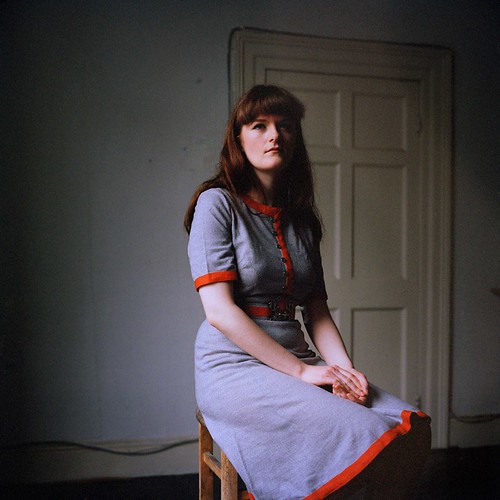
A portrait taken of me by photographer Kate Nolan in April 2014. See the other photos in her project here.
Blogging will recommence at some point.
In the meantime, find me on instagram.
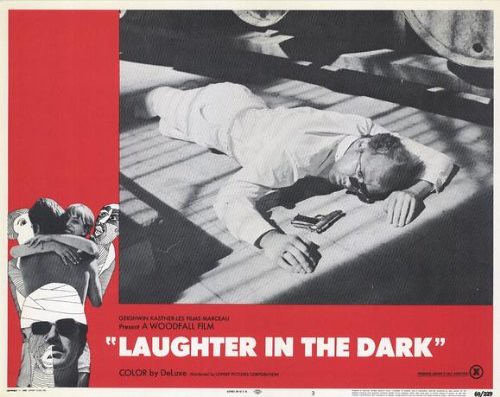
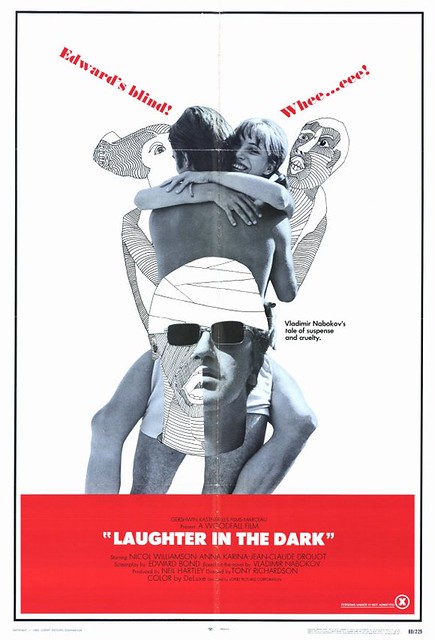
'Edward's blind! Whee...eee!'
Nabokov's book was published in Paris, in 1933 in his native Russian under the title of Kamera Obskura. The author's own English version, under the title of Laughter in the Dark was published in the USA in 1938, and published in the UK in 1961.
The film, now lost, was directed by Tony Richardson, then the David Bailey of the silver screen, who made his mark with gritty British dramas such as A Taste of Honey (1961) and The Loneliness of the Long Distance Runner (1962). It appears that the dramatic action is taken from 1930s Berlin to the 1960s (present day, when it was released in 1969). This suspenseful story of an unexpected menage á trois, concludes with devastating consequences.
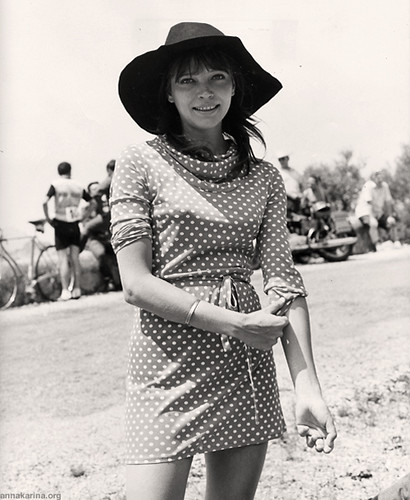
Anna Karina on the set of 'Laughter in the Dark' (1969)
Anna Karina plays the lead fille fatale role of the precocious teenager Margot. Born in Copenhagen, Denmark in 1940, Anna Karina was the original indie IT girl, beginning her career in Paris at 18, as a model for Chanel and Pierre Cardin, before her foray into film with some bit parts, until she met and later married the French new wave director Jean-Luc Godard, and the rest is cinema history.
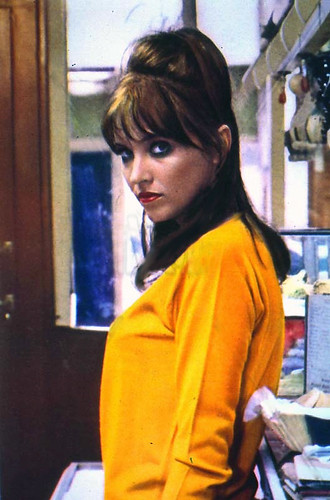
'A vulgar little Berlin girl'
The mystery of the film's disappearance has intrigued me for a couple of years, and fascinated by the plot, I had intended to read the book ever since. Last autumn, I came across a 1960s Penguin copy of the Nabokov novel in a charity shop and finally got around to reading Nabokov's incredibly visual story. The use of images from the film enhances its mystique for me, we'll never see this drama unfold onscreen. I've included excerpts below, with official stills from the film, in an attempt to piece together what the screen version may have been like.

1969 Penguin cover
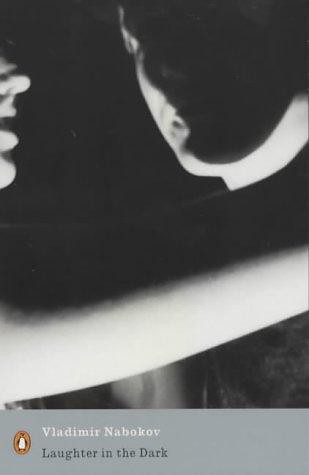
2001 Penguin Classics cover, using what appears to be a scene from the 1969 film, as seen below
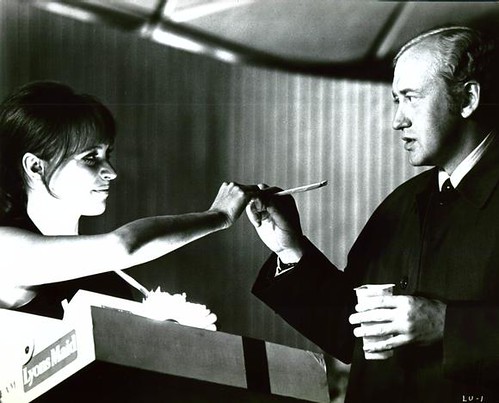
"Hardly had he entered the velvety darkness when the oval beam of an electric torch glided towards him (as usually happens) and no less swiftly and smoothly led him down the dark and gently sloping gangway. Just the light fell on the ticket in his hand, Albinus saw the girl's inclined face and then, as he walked behind her, he dimly distinguished her very slight figure and the even swiftness of her dispassionate movements." (Nabokov, 13)
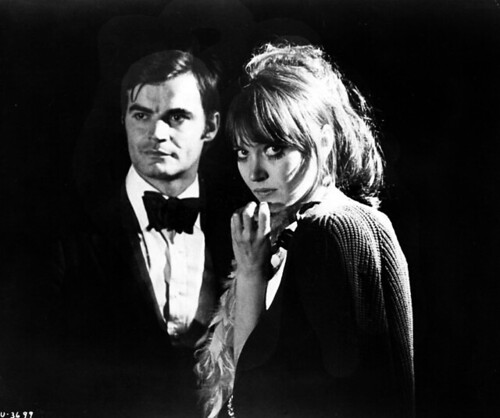
"And she liked Miller enormously. There was something so satisfying about the grip of his hands, the touch of his thick lips. He did not speak to her much, but her often held her on his knees and laughed quietly as he mused over something unknown." (23)
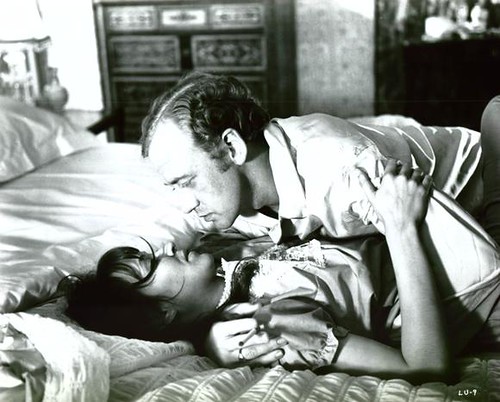
"He kept discovering new charms in her – roaching little things which in any other girl would have seemed to him coarse and vulgar. The childish lines of her body, her shamlessness and the gradual dimming of her eyes (as if they were being slowly extinguished like the lights in a theatre) roused him to such frenzy that he lost the last vestige of that diffidence which his prim and delicate wide had demanded of his embraces."
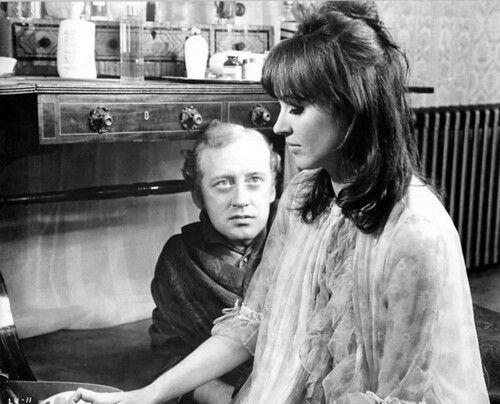
"Something was destroyed for ever; no matter how convincingly Margot tried to prove that she had been faithful to him, everything would henceforth be tainted with a poisonous flavour of doubt." (147)
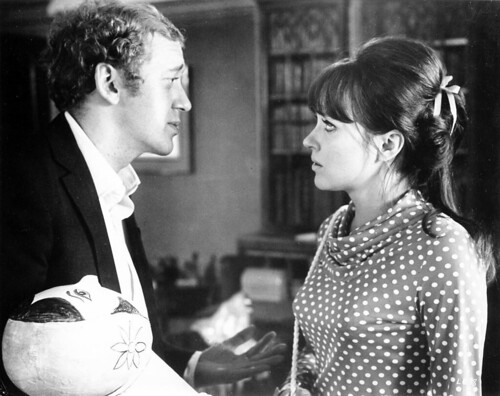

"Margot slowly drew herself up higher and higher, like a snake when it uncoils ... 'I can't go on being only your mistress,' she said, pressing her cheek against his tie, 'I can't. Do something about it. Say to yourself tomorrow: I'll do it for my baby! There are lawyers. It can all be arranged.'" (126)

"She amused herself in the way Rex had recommended: lying comfortably in a bright chaos of cushions, she consulted the telephone book and rang up unknown individuals, shops and business firms. She ordered prams, and lilies, and radio sets to be sent to addresses selected at random; she made fools of worthy citizens and advised their wives to be less credulous … she received wonderful declarations of love and still more wonderful curses." (108)
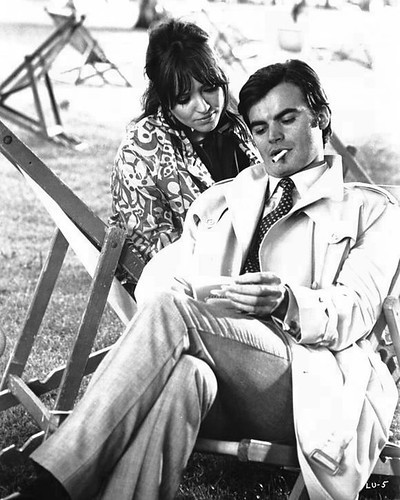
"He [Rex] took life lightly, and the only human feeling that he ever experienced was his keen liking for Margot, which he endeavoured to explain to himself by her physical characteristics, by something in the odour of her skin, the epithelium of her lips, the temperature of her body. But this was not quite the true explanation. Their mutual passion was based on a profound affinity of souls, though Margot was a vulgar little Berlin girl and he – a cosmopolitan artist." (118)


"There were stormy scenes at home, sobs, moans, hysterics. She flung herself on the sofa, the bed, the floor. Her eyes sparkled brilliantly and wrathfully; one of her stockings had slipped down. The world was swamped in tears." (124)



"Now Albunius saw her figure framed in the gay pattern of the beach; a pattern he hardly saw, so entirely was his gaze concentrated on Margot. Slim, sunburned, with her dark head of hair and one arm with the gleam of a bracelet still outstretched after her throw, she seemed to him an exquisitely coloured vignette heading the first chapter of his new life." (73)
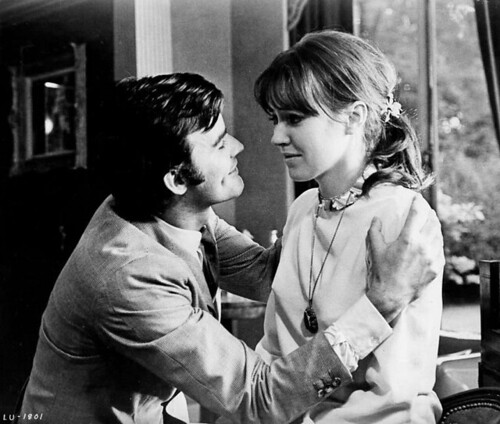
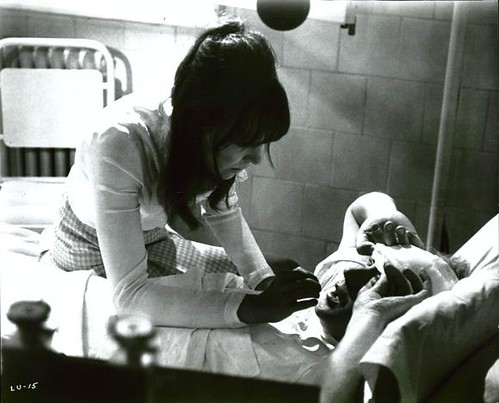
"Albinus’s speciality had been his passion for art; his most brilliant discovery had been Margot. But now, all that was left of her was a voice, a rustle, and a perfume; it was as though she had returned to the darkness of the little cinema from which he had once withdrawn her." (165)
View the rest of the images here.
Read more:
Nicol Williamson obituary
Excalibur star Nicol Williamson has just six mourners at his funeral
In my previous post, I shared the recipe for a mushroom wellington, which what the main of my Veggie Xmas menu, you can find the recipe for that and a roasted tomato soup by readingPart One here.
Vegetarian Christmas Menu
Starter: Roasted tomato soup (vegan)
Main: Mushroom Wellington (vegetarian/vegan)
Dessert: Orange Spice Cake (vegetarian)
Sides: Butternut gratin (vegetarian), roast potatoes and root vegetables, sweet potato and ginger mash (vegan)
Butternut Squash Gratin
(from Rachel Allen: Home Cooking)
1 large butternut squash (500g needed)
Salt and freshly ground black pepper
2 cloves of garlic, peeled and crushed, or finely grated
175ml double or regular cream
75g Parmesan or Gruyere cheese, finely grated
1 litre (1 3/4 pint) pie dish
1. Preheat the oven to 180c.
2. Using a sharp knife, peel the skin of the butternut squash. Remove all seeds, and cut into fine slices about 5mm (a quarter of an inch) thick.
3. Layer the slices of squash into the pie dish and season with salt and pepper.
4. Place the garlic and cream in a small saucepan, bring to the boil and then pour over the squash in the dish. Sprinkle with the grated cheese.
5. Cover the dish with foil and bake in the oven for 45 minutes to one hour, removing the foil after 30 minutes of cooking time. When cooked, the butternut squash should be soft and the top golden and bubbly.
Mary Berry's Orange Spice Cake
A fresh, spiced orange cake. If liked, you can ice the cake as well as fill it. Use just under half the orange filling to sandwich the cakes together and spread the rest on top
1 small thin-skinned orange
275g self-raising flour
3 level tsp baking powder
275g caster sugar
225g butter, softened
4 eggs
1 tsp ground cinnamon
1 tsp mixed spice
For the orange filling
50g butter, softened
175g icing sugar, sifted, plus a little extra for dusting
2 level tblsp orange pulp, reserved from the cake
1. Preheat the oven to 180C/fan 160C/gas 4. Line two deep 20cm tins with greased greaseproof paper. Place the whole orange in a small saucepan, cover with boiling water and simmer until soft, about 20 minutes. Set aside to cool.
2. When the orange is soft and cold, cut in half and remove any pips. Process the whole orange, including the skin, until medium chunky. Reserve 2 level tablespoons of the orange pulp for the icing, and leave the rest in the processor. Add the remaining cake ingredients and blend until smooth. Avoid overmixing. Divide the mixture evenly between the two tins.
3. Bake in the preheated oven for 25-30 minutes. Leave to cool in the tins for a few moments, then turn out, peel off the paper and finish cooling on a wire rack.
4. To make the orange filling, cream the soft butter, then add the sieved icing sugar and reserved orange pulp. Sandwich the cakes together with the icing, and sieve icing sugar over the top of the cake.
TIP - Thin-skinned oranges are usually smaller – avoid using Jaffa oranges as they have a very thick pith.
Best eaten fresh, but it will store in an airtight container for 2-3 days. You could also freeze the filled cake for up to 2 months. Thaw for 2-3 hours at room temperature.