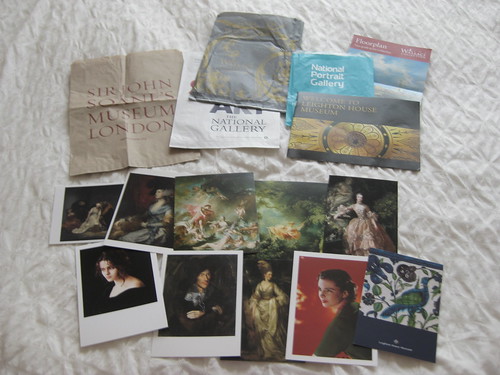
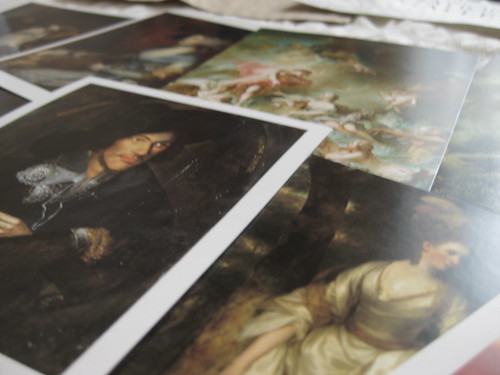
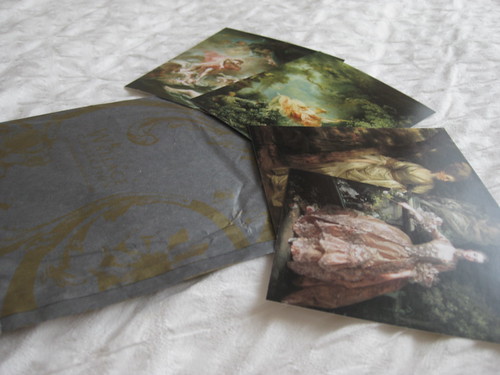
One of my weaknesses is postcards. I can't afford the art, but I can have a keepsake. Here are some of the many postcards I purchased in London and kept for myself (the rest making their individual journeys to Dubai, England, Scotland and Ireland).
The Wallace Collection
L-R:
1. Boucher, The Setting of the Sun, 1752
2. Fragonard, The Swing, 1767
3. Reynolds, Mrs. Elizabeth Carnac, 1885
4. Boucher, Madame de Pompadour, 1759
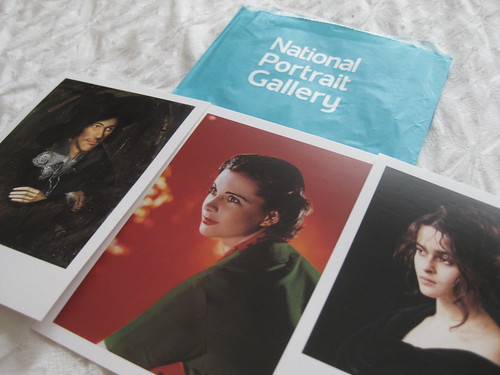
National Portrait Gallery
John Donne, Vivien Leigh, Helena Bonham Carter
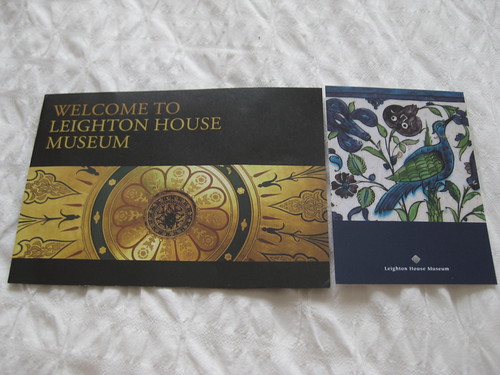
Leighton House, Holland Park
Postcard of a decorative tile from Damascus, seen in the entrance hall of Frederic Lord Leighton's house.
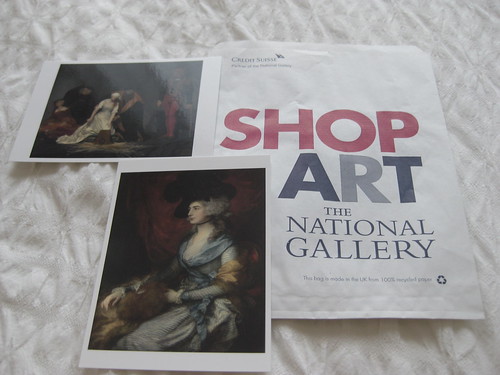
National Gallery, London
Delaroche, The Execution of Lady Jane Grey, 1833 & Gainsborough, Mrs. Siddons, 1785
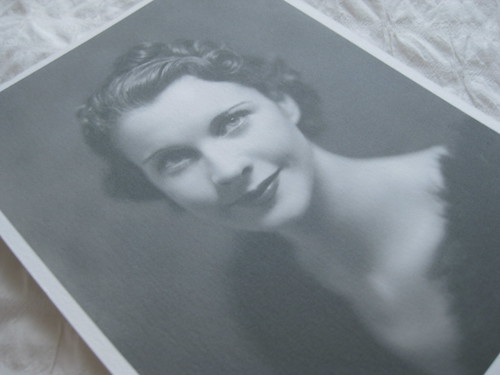
National Portrait Gallery
Vivien Leigh (1913-1967) print, taken by Alexander Bassano (April 1935), presented 1974 by Bassano to NPG
I can't wait to frame this and to have a home in which to display it. This photo also graces the walls of The Savoy, London.
What do you do with your postcards? How do you store them? One of my friends writes what they know about the painting on the back, along with the visiting date and then stores it. I've left it too late to start doing that I fear! But looking over my postcards I know where and when I bought it and whom I was with (for the most part).
I'm always interested in international postcard swaps with other bloggers if anyone wants to partake with me!
This is my contribution to Kendra's Vivien Leigh and Laurence Olivier Appreciation blog-a-thon, running this weekend, July 9th & 10th.
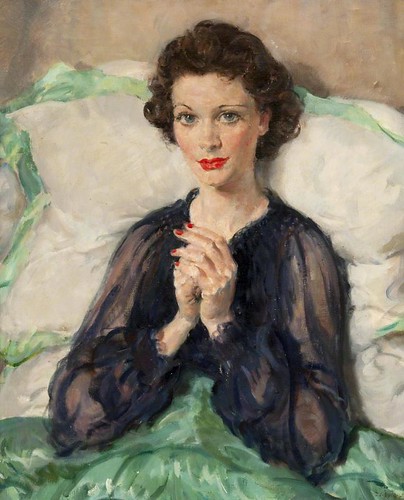
Vivien Leigh (1913–1967) by Thomas Cantrell Dugdale, c. 1936
Owned by Glasgow Museums, on display in Kelvingrove Museum and Art Gallery.
This post was inspired by a portrait of Vivien I unwittingly stumbled across in Kelvingrove Museum and Art Gallery a few weeks ago. Considering I am studying art history, I thought it would be appropriate subject matter for me, combining two of my loves!
Vivien Leigh was a well known name in the late 1930s, we know she toured with The Doctor's Dilemma in 1942 which played in Glasgow and Edinburgh. In 1936 The Happy Hypocrite went on tour, but I'm not sure if it played in Glasgow, though it did in Manchester. Unfortunately, there is little information on Vivien and her time in Scotland, so I can't really explain why this portrait ended up in Glasgow. I do know it was acquired by Glasgow Museums in 1936, the year it was painted. I don't know who commissioned it, nor why.
Vivien appears to be sitting upright in bed, the sheets pulled up to her waist, in an attractive gauzy nightgown, the black standing starkly out against the delicate background of the green and white sheets and pillows that surround her protectively. The glamour of her position is recognizable, with her fashionably teased hair, thin eyebrows, that striking red lipstick and highly polished red nails. She clasps her hands to her chest in an almost nervous, anticipatory gesture. Her expression is a little sad as she gazes questionably at the viewer.
The bed scene is an unusual one for portraiture, where sitters usually are depicted in settings appropriate to their position. Looking at this portrait retrospectively we can sadly reflect that Vivien did spend a significant amount of time bed bound, owing to her delicate health, so perhaps this setting is appropriate, but why the artist chose to paint her here - was it by choice or the situation he found himself in? Vivien's nervous, restless character is alluded to in Alan Dent's biography 'Vivien: A Bouquet' I found an entry from Oswald Frewen's diaries for Monday, August 31st, 1936:
'Returning to the Vivling's, and she came in with Laurence Olivier and an influenzal throat and chill. O. opined rum, and I popped over to the Pitt's Head and amused them by asking them to give me some in the tumbler I brought with me ... We pumped it into the Vivling with hot water added and sugar and she hated it... Larry was just amusing. He couldn't make out what I was doing in the house, why Viv was interested in my purchase of rum, nor least of all why I should sit on her bed and propose to 'talk her to sleep' after he had gone. He tried and tried and tried again to establish the fiat that we all leave her; she was wakeful. I said I had a voice calculated to put anyone to sleep in 10 minutes; Vivling agreed (with a seraphic smile); larry was not amused. Rang up next morning to ask how she was and who was the 'smasher (trade term for stage-door pushful over-enthusiasts)!'
Thomas Cantrell Dugdale RA was a British painter, born in in 1882 (d. 1952). During the Great War he served in Egypt, and painted a number of portraits of Air Marshalls and those serving on the front line, including nurses. His work was varied, he painted portraits of everyday people from fishermen to mothers as well as many exotic middle eastern landscapes, to street scenes of London. Not much is known about him, but from what I've seen, his palette can be bright and imitative of natural light, to solemn for more serious portraits, but bestowing all his subjects with an upright bearing and dignity.
His paintings seem to appear regularly at auction, including a number of society portraits. The one of Vivien above appears to be in this society portrait vein, but somewhat curiously, unlike the other portraits of Dugdale's I have seen she appears to be depicted as sitting in bed, which seems an out of the ordinary setting for a portrait. See also his portraits of silent movie actress Maudie Dunham, Lady Dorothy Etta Warrender, Wendy Hillier (held in the National Portrait Gallery) and Jessie Matthews (apparently in Andrew Lloyd Webber's own collection).
What was Vivien doing in 1936?
The year previously (1935) to this portrait being painted, Vivien had become an overnight sensation, having been discovered in The Mask of Virtue, which ran in London's West End. In 1936, she starred in The Happy Hypocrite alongside Ivor Novello. As for her personal life at this time, she had a young daughter, was a rising star in London's theatre world, and it was around this time that her affair with Laurence Olivier began, in 1937 their first film together Fire Over England was released.
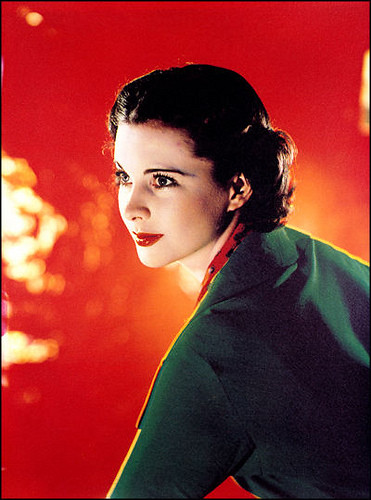
Vivien sat for the society photographer, Madame Yevonde in 1936. It is interesting to be able to make comparissons between the two, to see how faithful the depiction of Vivien was. Of course, the methods being quite different. I love the contrast between the two depictions, in Cantrell's painting Vivien is cooly beautiful and elegant, a small smile playing across her face. In Yevonde's photograph we can see the vivacious Vivling that we love, a mischievous smile, a light dancing in her eyes, all fire and ambition - perhaps she'd seen Larry that day? She was clearly London's darling, at the height of her theatre career, her talent, charisma and beauty attracting painters and photographers alike, who wanted to capture her spirit on canvas and film. I love that she is wearing bold red lipstick in both representations, this says something about her too, always ready for her close-up, no matter where. Yevonde photographed other subjects depicted by Cantrell, such as Lady Dorothy Etta Warrender, mentioned above.
If you can tell me anything more about Vivien in Scotland, or about this artist or particular painting, please get in touch! Comments are very much welcomed!
So my main objective for going to London at the end of May was to take part in A Weekend with the Oliviers, organised by Kendra.
It was two days spent with a legion of Vivien Leigh and Laurence Olivier aficionados, bliss! The schedule consisted of a tour of the Old Vic on Saturday morning, followed by a screening of That Hamilton Woman (Vivien in the role of the infamous Emma Hamilton and Larry as Nelson, naturally). Sunday was my personal favourite venture of the weekend, we met at the Olivier statue at the National Theatre and from there began our Vivien and Laurence themed walking tour of London.
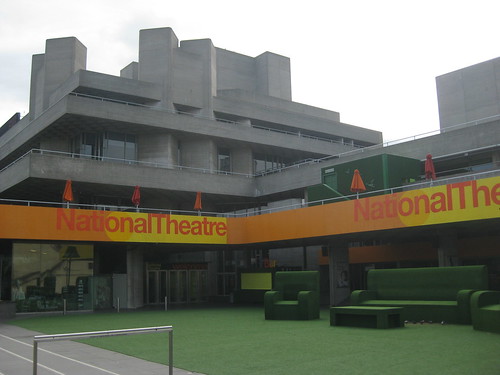
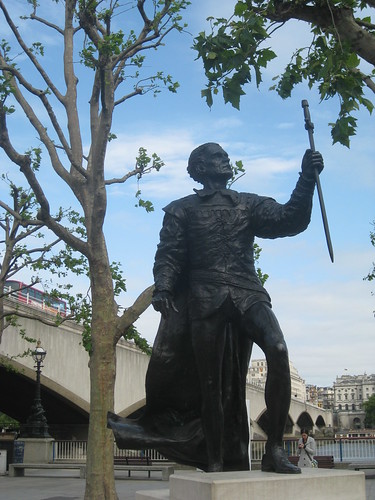
Olivier's statue outside the NT, erected in 2007. Olivier was the first director of the National Theatre, 1963-1973 (during its years at the Old Vic).
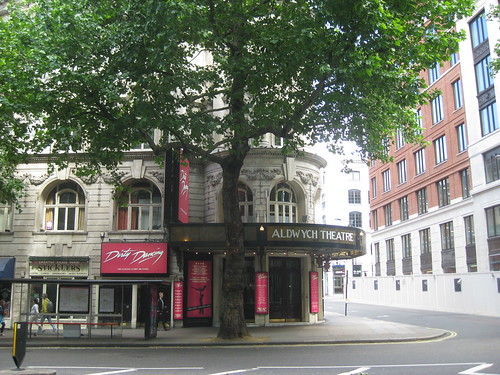
Aldwych Theatre, Laurence Olivier directed Vivien Leigh in A Streetcar Named Desire here in 1949.
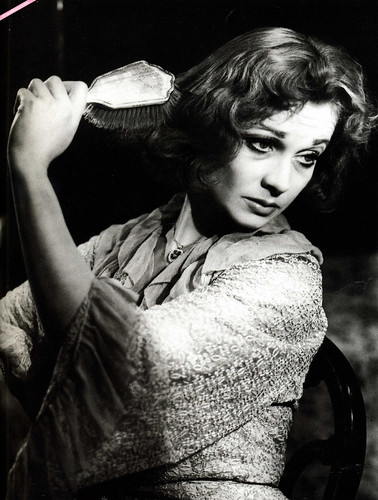
Vivien as Blanche du Bois, 1949.
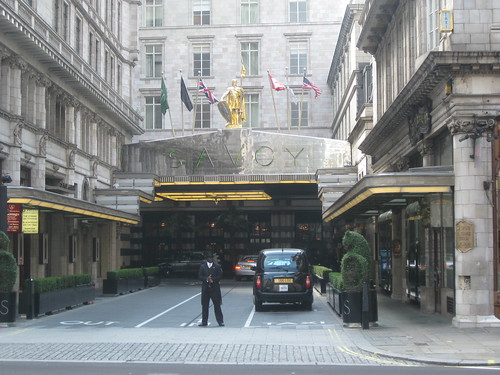
The Savoy, where Vivien and Larry first formally met in 1937.
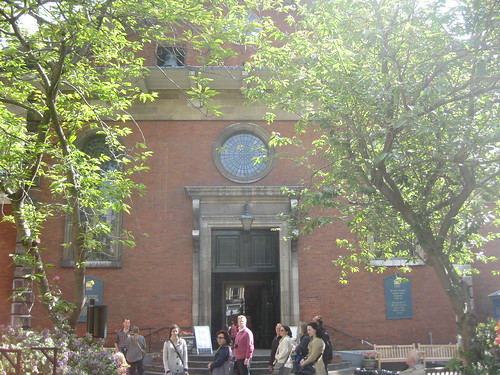
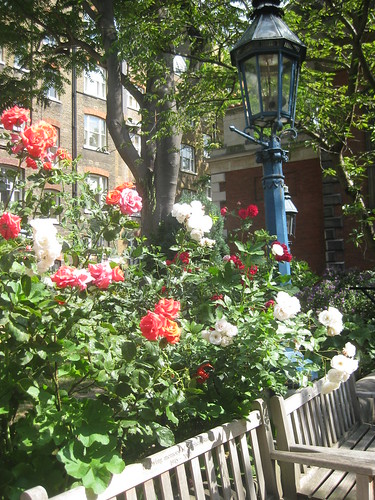
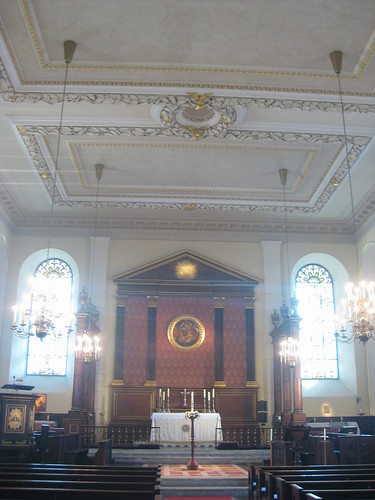
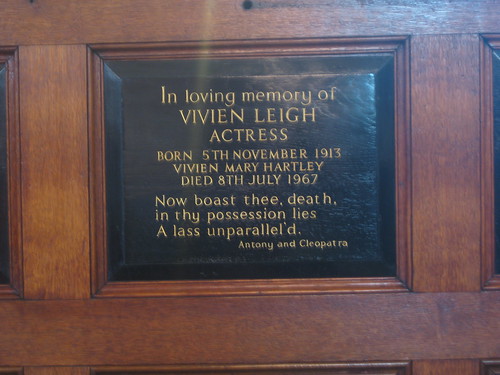
Vivien's memorial plaque (erected by in, as Vivien has no formal gravestone, having being cremated after her death).
St. Paul’s The Actor’s Church, Covent Garden
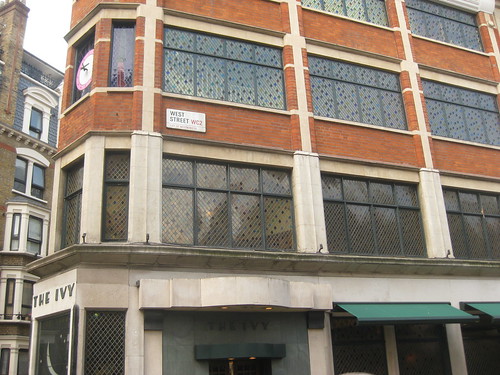
The Ivy
This famous, exclusive restaurant near Covent Garden was frequented by London’s smart set, including Vivien Leigh who could often be spotted dining alongside Noel Coward and other theatrical luminaries.
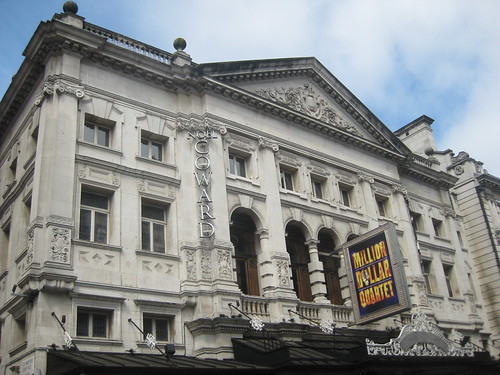
The Noel Coward Theatre
This is where the Old Vic company performed during and after the war while waiting for bomb damage at the Old Vic to be repaired. The stage at the New Theatre is where Laurence Olivier officially became a theatrical superstar during the 1944-1945 season.
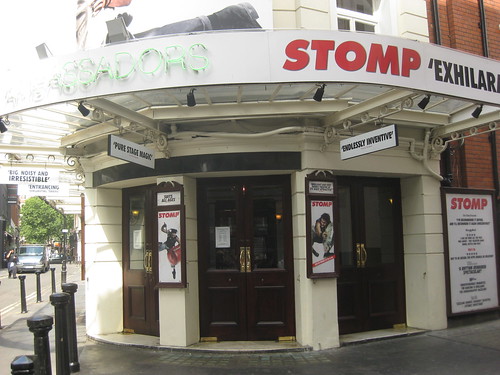
Ambassadors Theatre
Just next door to the Ivy, Vivien Leigh became an overnight star when The Mask of Virtue opened here in 1935.
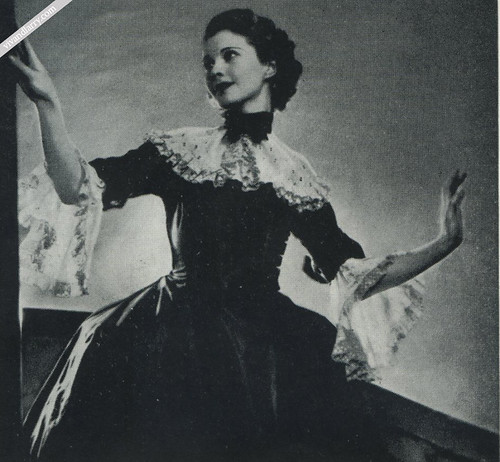
Vivien as Henriette Duquesnoy in The Mask of Virtue, 1935, a reformed prostitute masquerades as 'a paragon of innocence'.
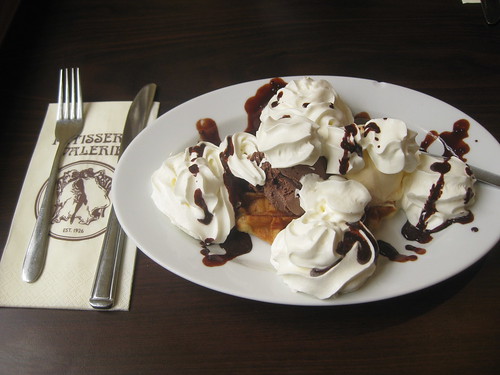
Afternoon tea - Having a very creamy waffle at Patisserie Valerie, 44 Old Compton Street, London
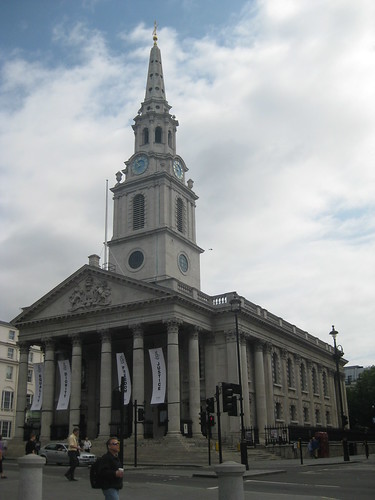
St. Martin-in-the-Fields, Trafalgar Square, Vivien Leigh’s public memorial service was held here.
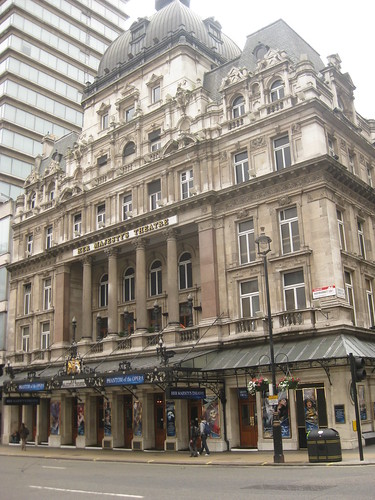

Her Majesty's Theatre, Just across the street from the Theatre Royal. Vivien Leigh starred alongside Ivor Novello in The Happy Hypocrite here in 1936.
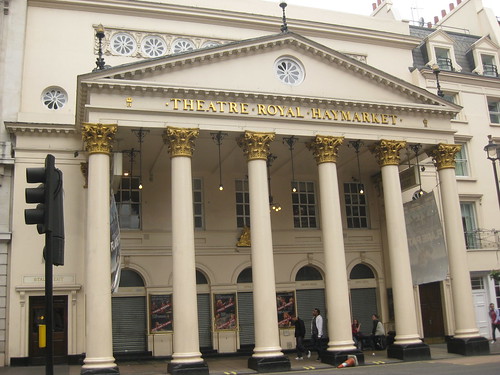
Theatre Royal Haymarket, When The Doctor’s Dilemma came to London in 1943, it opened at this theatre and ran for over a year because audiences were thrilled to be able to see Scarlett O’Hara in the flesh.
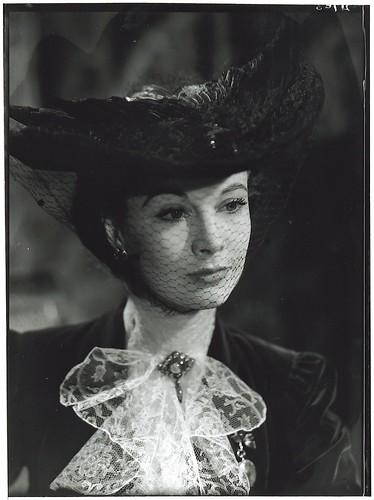
Publicity still of Vivien as Jennifer Dubedat in The Doctor's Dilemma, taken by Angus McBean. Also, Larry's favourite photo of Vivien.
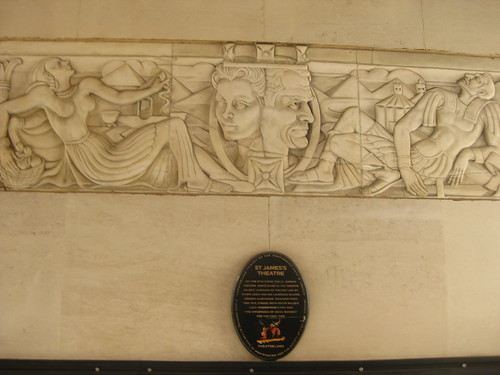
St. James House, Holland Park, London. The former site of the St James’ Theatre. It was demolished and rebuilt as a modern office building, but the alley between the office and the pub next door boasts a relief of the Oliviers in the Two Cleopatras as well as a plaque commemorating the protest to save the theatre that was led by Vivien Leigh in 1958.
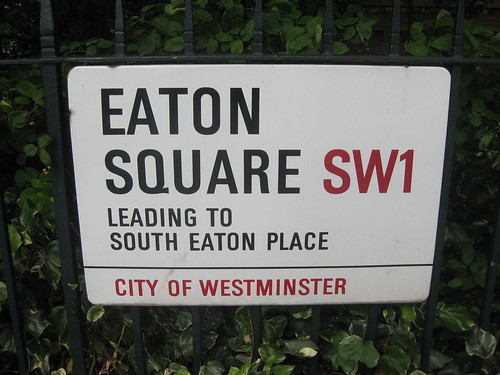
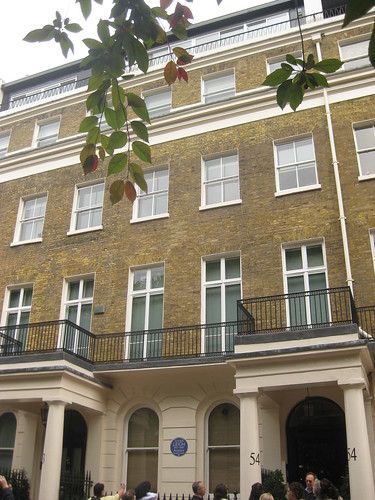
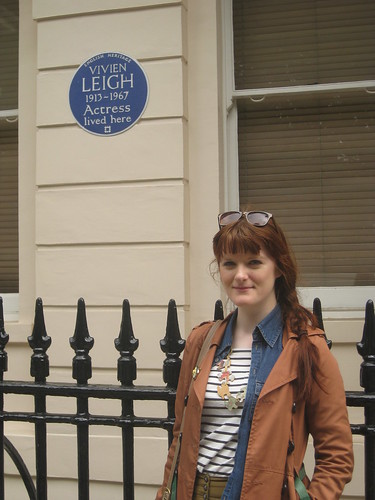
This flat (flat D) in one of the most expensive neighborhoods in London, was purchased by the Oliviers in 1958, Vivien lived here until her death in 1967. Today it is occupied by Louise Rainer.
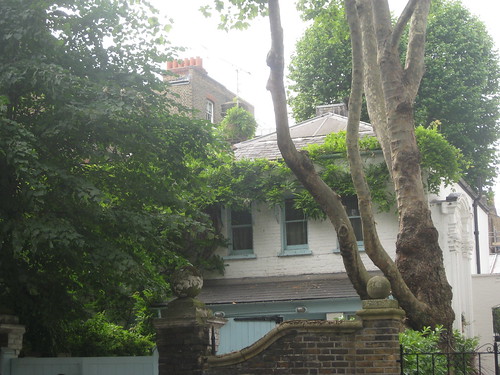
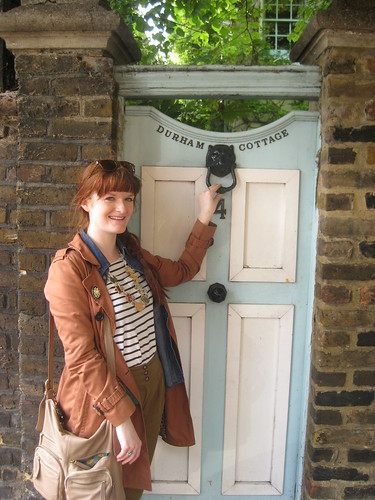
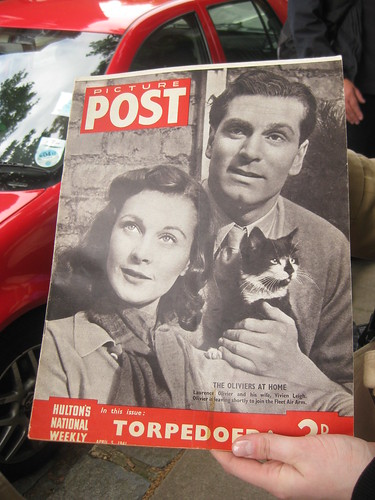
Vivien & Larry at Durham Cottage, Chelsea, SW3
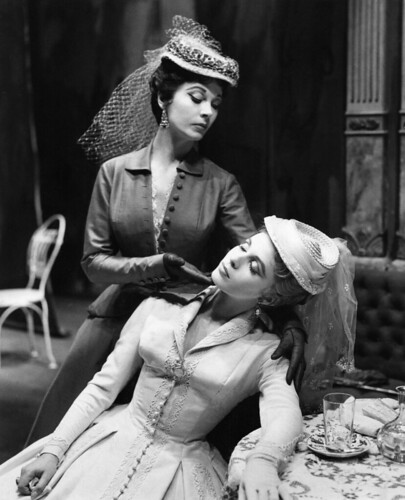
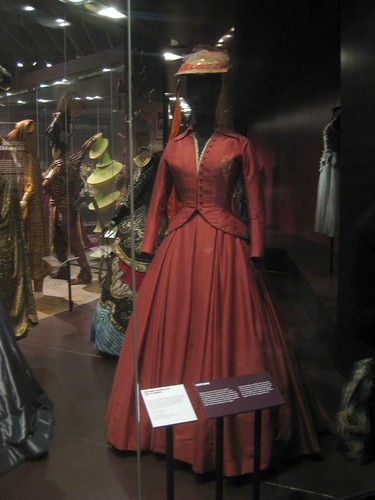
Vivien Leigh's Duel of Angels costume, Dior, V&A
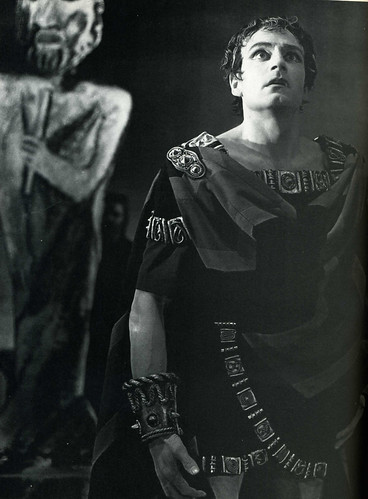
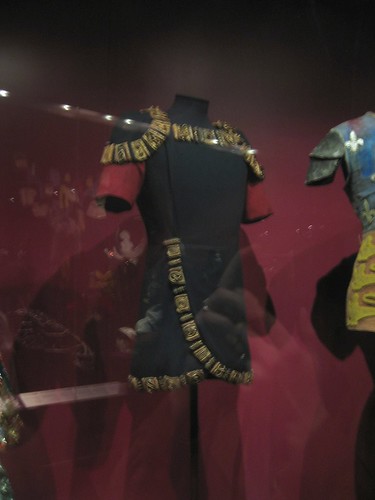
Laurence Olivier's Oedipus Rex costume, 1946, V&A
For a comprehensive list of these and other Larry and Vivien places of interest around London, you can find them here and here.
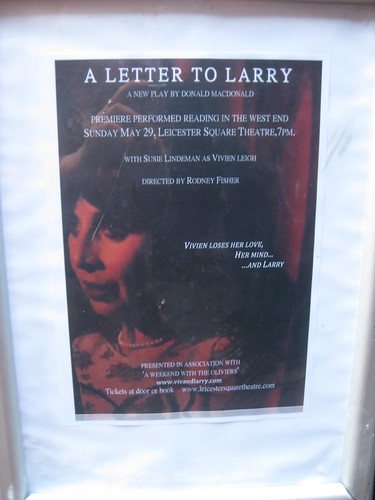
After this exhausting day, we went for some food in Leicester Square before going to see Susie Lindeman's performance as Vivien in A Letter to Larry. Tarquin Olivier was in residence! I was too shy to shake his hand but others took the opportunity. It was a strong performance by Ms. Lindeman, based on Larry's request for divorce from Vivien, so some dark subject matter was being dealt with.
We then said our respective goodbyes, and took our exhausted but happy selves home.

