Open House Dublin, held annually in October, is Ireland's largest Architectural festival, running annually, part of the Architectural Festival Family worldwide which includes Chicago, London, Lisbon, Helsinki and Dublin. Last October, I volunteered in the North Georgian Quarter of Dublin and I wrote about my experiences here.
Overall participating in this weekend has been a rewarding experience. Over the three days, 100 buildings of historical, social and architectural interest open their doors to the public. This festival facilitates special tours by hundreds of professionals and enthusiasts to interested members of the public. Being a volunteer you get the opportunity to experience these special buildings, share them with the public and meet other interesting volunteers besides.
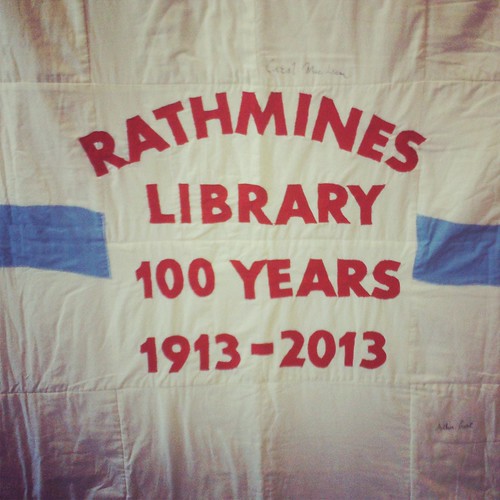
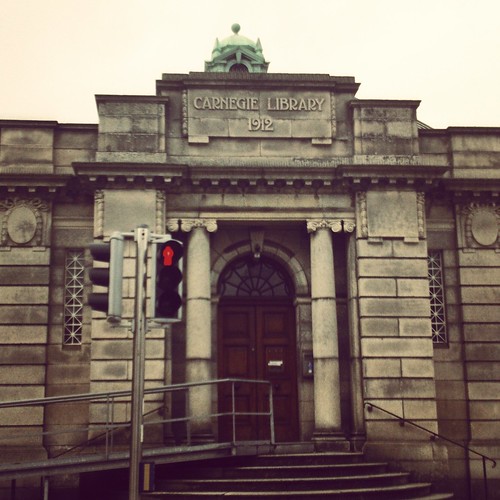
Rathmines Library
Top: Rathmines library celebrates its centenary this year
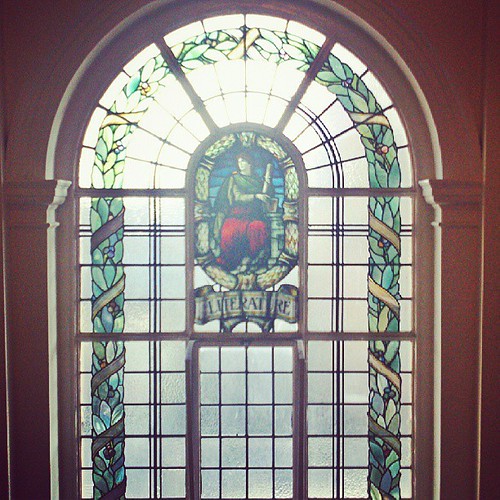
Middle: Morris & Co. 1913 stained glass window, with an allegory for literature.
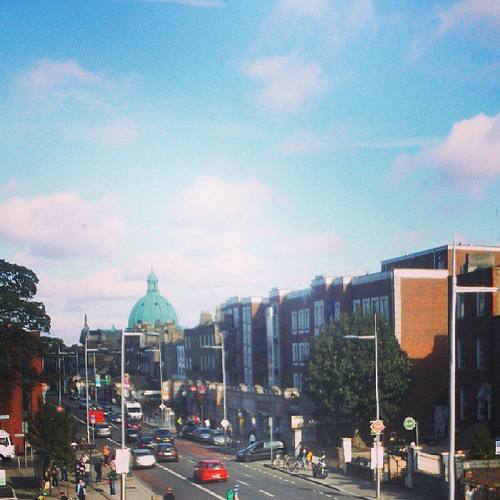
Bottom: View of Rathmines towards Portobello from a library window.
On Saturday, I was based in Rathmines Library. This public library is the second busiest in Ireland, and was full of life all afternoon. It was cheering to see all the young families and various members of the community come through the doors. The stained glass window to the front of the building, was commissioned from William Morris & Co. in 1913, the simplicity of design is certainly in the Morris style. A classical figure is seated in the centre, as an allegory for literature. Rathmines Library is one of libraries funded by the Scottish-born philanthropist Andrew Carnegie. Carnegie's fortune is a true rags to riches story, coming from his successful steel business in the USA. Upon the sale of his business for $480m, he dedicated the rest of his life to philanthropic activities. He built the famous Carnegie Hall, and funded the establishment of public 'Carnegie libraries' throughout the English speaking world.
By great coincidence, or not, when I ventured out to Dun Laoghaire on Sunday, I discovered they too had a Carnegie Library!
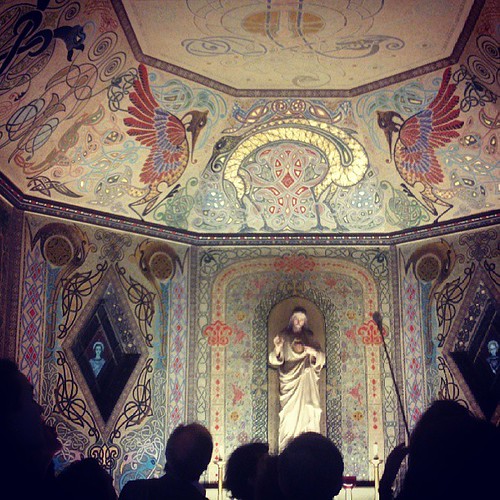
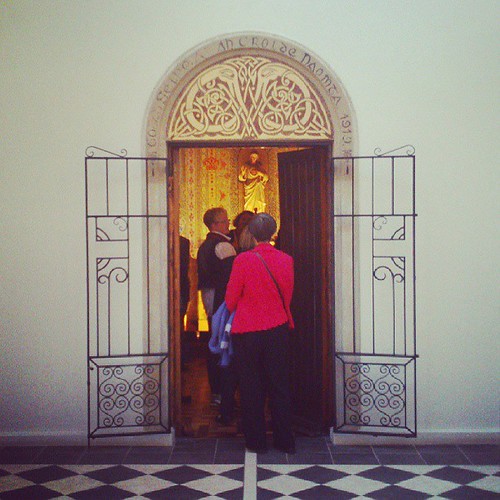
Oratory of the Sacred Heart, Dun Laoghaire
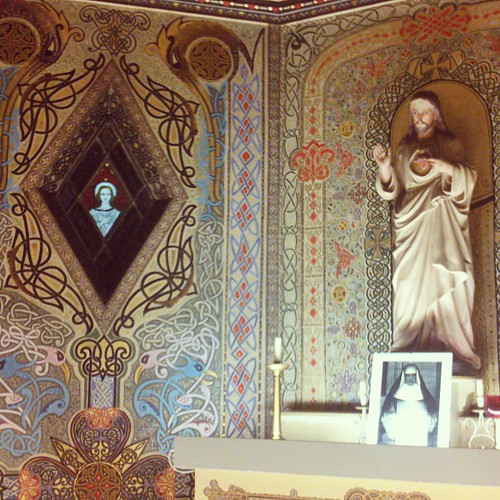
Top: Entrance to the Oratory of the Sacred Heart (c. 1919)
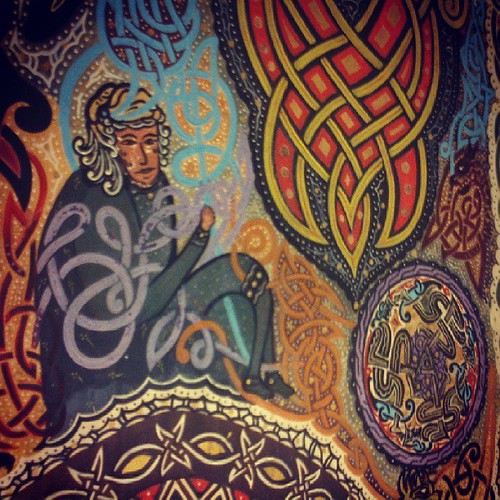
Middle: Mural detail of a Celtic figure
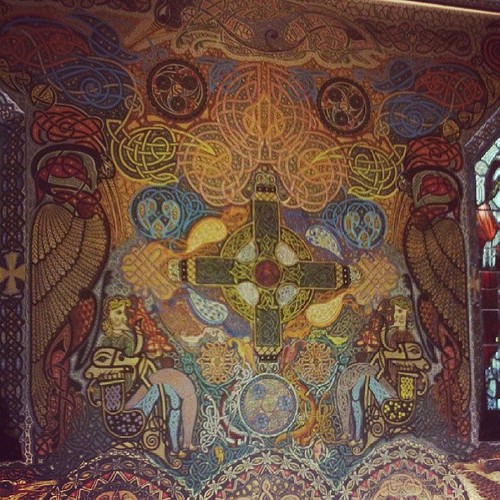
Bottom: Painted mural commemorating the 1932 Eucharistic Congress, which had taken place in Dublin
The journey from Dublin city centre takes about 50 minutes on a 46a bus, or 20 minutes on the DART. I was tied for time, as I had to get the last train back to Sligo on Sunday, but it was a beautiful mild afternoon, so I didn't mind the journey or the destination at all!
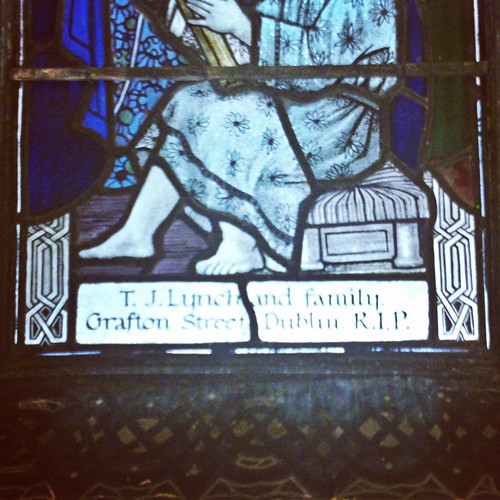
Sister Concepta Lynch (1874 - 1939, born Lily Lynch) learnt the Lynch Method of Celtic Art from her father, Thomas Joseph Lynch, a renowned Dublin artist who specialised in Celtic illuminations. After her father's death when she was 16, she ran his studio on Grafton street for a further six years, until taking her vows and becoming a nun in the enclosed order at the Dominican convent, Dun Laoghaire.
At the end of World War I, a town in Northern France donated a statue of the Sacred Heart to the parish of Kingstown (now Dun Laoghaire) to commemorate the many local Irishmen who had fought and died in Flanders during World War One. In response, in 1919, an oratory was commissioned by the Dominican sisters. Upon its completion, Sr Concepta was asked to decorate the altar, after witnessing the style in which she had executed it, her Mother Superior asked her to decorate the entire oratory, and she did so in the Celtic Revival style she had learnt from her father. She worked on the oratory for sixteen years (1920-1936), only giving up when she was in ill health towards the end of her life. As you can see from the pictures its not your conventional war/peace memorial!
Top: The sacred heart statue was brought over from France after WWI, see the Harry Clarke & Co. stained glass in the background
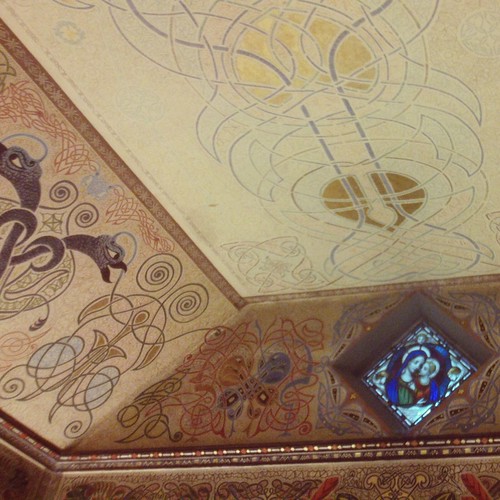
Middle: The ceiling remains unfinished, after Lynch's death in 1939, Harry Clarke & Co. stained glass in the background
Bottom: The Harry Clarke & Co. stained glass was commissioned by Lynch, she had it inscribed with the names of family members who had helped fund and inspire her work in the oratory
The design of the oratory takes its inspiration from Celtic manuscripts, including the Book of Kells, as well as Byzantine methods of decoration. Celtic illuminations are notable for their zoomorphic designs (designs taking animal forms), figures, wonderfully curved designs and repeating patterns. This all encompassing design took Lynch sixteen years to complete between (1920-36), she became ill and couldn't complete the ceiling of the oratory. However, this does not detract from the design, as you can clearly see her design process, where she sketched out the designs in graphite pencil, using templates for repeating designs. Unbelievably the oratory is painted totally in household paint. As she was in an enclosed order she could not purchase the paints herself from a specialist art shop, so she would send her students with a list of her desired colours to the local shop to buy paints.
It is a shame that Lynch isn't more recognised in the Irish art canon. This is possibly due to a number of inter-related factors, significantly, she was in an enclosed order so she was not part of the artistic social scene in Dublin. The oratory itself was in a fixed location on the grounds of a convent in a coastal village outside Dublin, so its not like her life's work could be exhibited to the greater public.
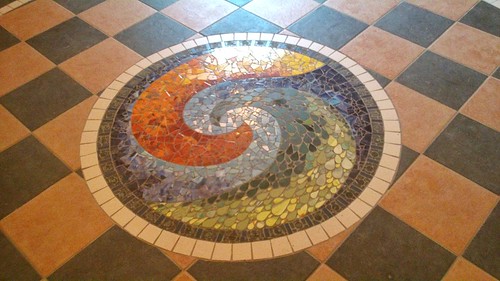
The modern building, or 'shell' that now surrounds the oratory was constructed in the 1990s in order to protect the small oratory. The entrance area has this beautiful mosaic set in the centre, by the artist Laura O'Hagan, who designed it in response to the Celtic Revival decoration of the oratory.
--
I apologise for the quality of my photos, it wasn't until I was on a train bound for Dublin that I realised I had forgotten my camera! Its difficult to source photos of the Oratory online, but I found some high resolution pictures of the oratory here on the Militaria Archive.
Rathmines library celebrates their cententary this year, and are hosting a number of fascinating (and free!) talks and events throughout October and November. View the full series of events on their site here.
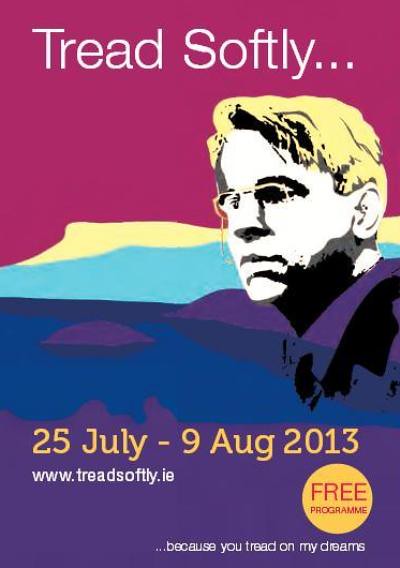
Tread Softly... A Season of Yeats, is an annual 10 day festival running alongside and complementing the Yeats International Summer School, focusing on the connections between Sligo and Yeats through a programme of music, exhibitions and spoken word performances.
The Tread Softly festival is an initative that seeks to promote Sligo's Yeats legacy as a unique cultural visitor attraction. "The Land of Heart's Desire" has long held appeal for devotees of the poet Yeats, but the story of the Yeats family has its roots in Sligo's rich landscape.
The short video above shows the highlights of last year's first 'Tread Softly' festival. From 2:45 onward you can hear me speak! Last year I gave tours of the John and Jack B. Yeats 'Father and Son' exhibition at The Model gallery. This year I will again be giving a couple of public tours of the current Jack B. Yeats' exhibition 'Enter the Clowns: The Circus as Metaphor'.
Though not a new concept by any means, cultural tourism has gained a lot of mileage in recent years, particularly amongst regional tourism groups striving to make economic gains by utilising their unique local cultural heritage. And who can blame them? Personally, I have seen a vibrant revival in Sligo's arts and culture scene, since I returned a little over a year ago (after being abroad for almost 2 years). Much progress has been made to promote Sligo as a cultural destination, for the benefit of its locals and visitors alike. Cultural tourism also takes place at a local level, with the advent of facebook, many groups promoting local history and encouraging engagement from their members have sprung up. Some recent festivals promoting their area's unique cultural attractions include the Liberties Festival and Happy Days - Enniskillen's International Beckett Festival.
What is Cultural Tourism?Cultural tourism is about understanding the collective cultural offer of a destination, matching that offer to (and connecting with) the 'wraparound' industries (food, drink, hotels, shops and so on) and making sure that it's all packaged in a way that is meaningful to the consumer. (Helen Palmer, 'Why cultural tourism is not a quick fix', The Guardian, April 15 2013)
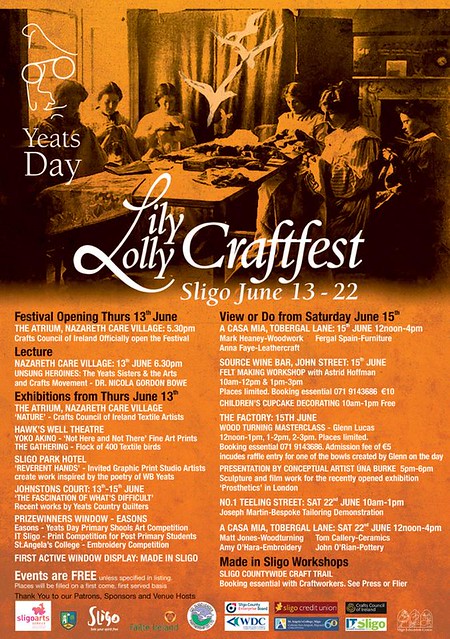
Recently, in acknowledgement of this, the North-West Craftfest was rebranded as the Lily Lolly Craft Fest. The aim is to commemorate the legacy of the lesser celebrated Yeats sisters, who were pioneering craftswomen in their own right. They were at the forefront of the Irish Arts and Crafts movement, founding the Dun Emer Guild in 1902 with Evelyn Gleeson in Dundrum, Co. Dublin. You can read the article I wrote on the sisters for the Women's Museum of Ireland here.
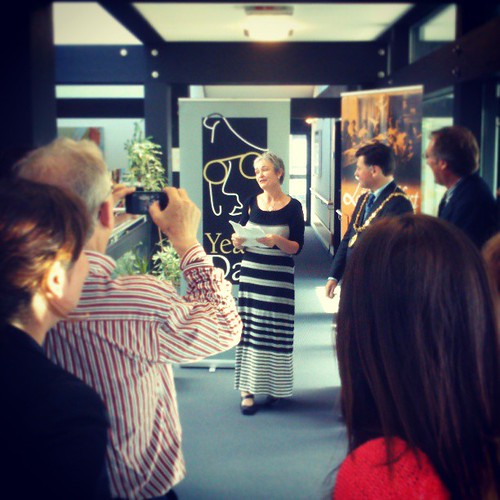
1. Martina Hamilton, owner and designer at the Cat and the Moon craft boutique and jewellery shop, and curator of the Hamilton Gallery, officially launching the Lily Lolly Craftfest on June 13th.
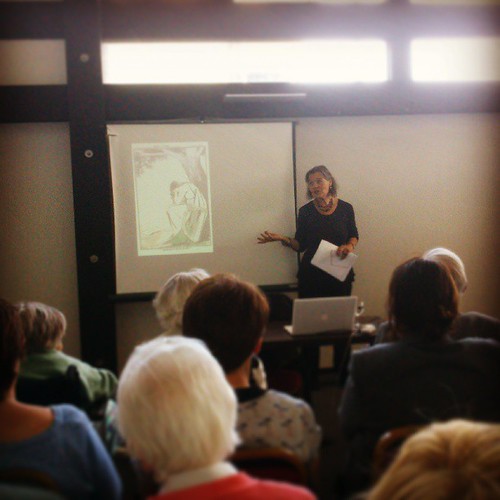
2. Celebrated academic and expert on the Irish arts and crafts movement, Nicola Gordon-Bowe, delivering a talk on the legacy of the Yeats' sisters, at the Lily Lolly Fest.
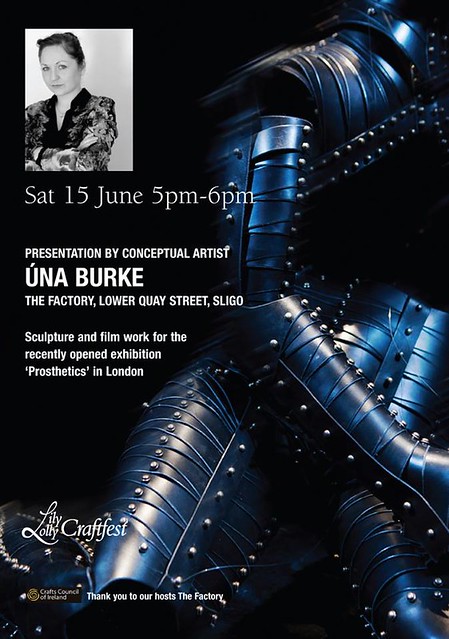
The Lily Lolly Craft fest coincided with Yeats Day 2013. Yeats Day is envisioned to be Sligo's version of Bloomsday (June 16th) or Shakespeare's Birthday (April 20th).These are grand shoes to fill. Expectations are hig. The Lily and Lolly festival had the support of local businesses and crafts people. My festival highlights include the Nicola Gordon-Bowe lecture, Una Burke's talk and an embroidery workshop with Amy O'Hara of Dumore Embroidery. These events certainly played close to the Lily and Lolly legacy, by promoting a body of work by by local craftswomen, and the festival was launched with a talk by Nicola Gordon-Bowe, an authority on the Yeats sisters.
My criticism would lie with the marketing of these events, particularly the digital strategy. While the leaflets and poster designs were of particularly high quality. There appeared to very little engagement with Sligo's online community, or the online craft community at large. Una Burke's talk was a total revelation to me, but was so poorly marketed that the attendance for what was an outstanding afternoon was less than it should have been. This lady's career is on the rise, she has designed for Lady Gaga and has exhibited in prominent London galleries! Her inclusion in the event line-up should have been shouted from the rooftops, at least the virtual ones! The failure of the digital strategy to provide a suitable platform for the local businesses that participated meant that some events didn't receive as much attention as they might have done. In this globalised world, cultural organisations cannot afford to ignore the digital sphere when working in cultural tourism.
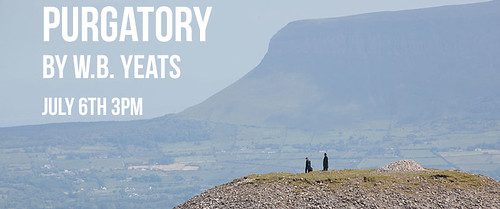
Looking at organisations finding their soft spot in engaging the cultural and digital sphere ... one of the more unique places I have gone to see a performance, Sligo's Blue Raincoats Theatre company staged a performance of W.B. Yeats' play Purgatory at the summit of Knocknerea mountain, at the base of Queen Maeve's cairn. Incentives like this promote Sligo as a unique cultural destination, a place where magical things happen, such as a contemporary theatre company staging a play by one of the counties famous sons, at the summit of an ancient mountain.
The 'Sligo Who Knew?' campaign turns to social media to unearth the counties hidden gems and to promote Sligo as a 'staycation' destination, being only a 2 and a half hours drive from Dublin. Using the #sligowhoknew hashtag Sligo businesses, cultural centres, selected digital ambassadors, tourists and Sligo tweeters can share the hidden corners of Sligo, from their unique point of view! You can see all the tagged content from all social networks on the #sligowhoknew tagboard. It is probably one of the most forward thinking digital tourism strategies in Ireland at the moment! As a Sligo person, I too play a part in this dialogue, as the press release highlights - "Locals Become Proud Ambassadors of their Homeland".
"… Sligo was a different habitation. A small and beautiful town situated almost at the western edge of Europe, it was bounded by green fields, mountains, and the sea, and its narow streets were lined with small shops. At the quays there were boats loading and unloading, and sailors with stories that made the world seem “full of monsters and marvels”. Over the town to the west loomed the mountain Knocknarea, on its flat top an enormous mound supposed to contain the remains of Queen Maeve; to the north beyond Drumcliff stood Ben Bulben, the long stone outcrop ending in a massive, razor-sharp edge. With its mists and changing colours, its ancient mysterious mounds and dolmens, Sligo was a place where one could easily believe in a world of magic.” 'Prodigal Father: The Life of John Butler Yeats (1839-1922)', William M. Murphy,
(London: Cornell University Press, 1978)
Sligo and its enchanting landscape was a constant source of inspiration for all of the Yeats siblings. Prompted by their father's inability to secure and retain commissions they entered into artistic professions with the intention of earning a living, with the explicit aim of utilising their creative talent into something productive and profitable. These recent festivals promote the Yeats family legacy and seek to place it at the centre of the cultural, historical and physical spirit of Sligo, inspiring a new generation to be inspired by Sligo and its creative traditions; just as the Yeats family once were.
As a child growing up in the West of Ireland, on the suburbs of a large town, we had the "poverty channels" (how us those of us from outside the Pale would later jokingly refer to a childhood spent watching the basic national TV channels). There were only 2 national television stations, Rte 1 and Network 2, the more obscure TG4 and TV3 were later arrivals in the mid 90s. In the pre-Celtic Tiger years, only the more affluent classmates seemed to have the British channels.
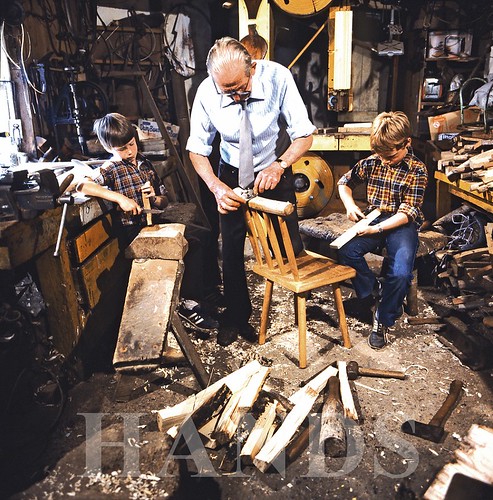
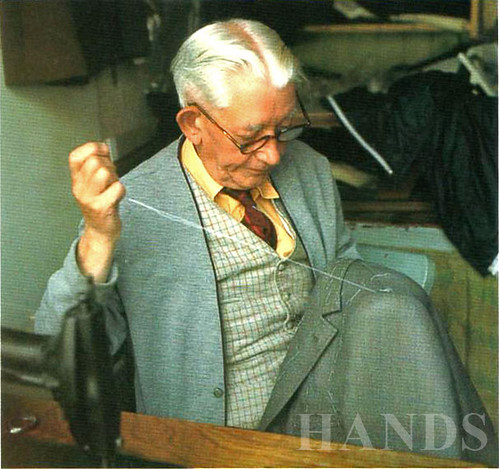
I'm glad my parents refused to budge though, because in the days before our huge, awkward desktop arrived in the early 00s, rainy day television was my only distraction when I'd finished reading all my books. I watched a great many things, my interest in old films and eclectic old documentaries stems from this time (necessity fuels the imagination). By happy coincidence, Hands was one of those iconic documentaries screened repeatedly by RTE over the years, I watched quite a quantity of them, charmed by the almost skill of the craftsman, many who seemed to be kindly old rural bachelors who spoke in indecipherable heavy Cork accents. Now numbering over 37 documentaries focusing on the survival of traditional Irish craft in the Age of the Machine, in all the 32 counties on the island of Ireland.
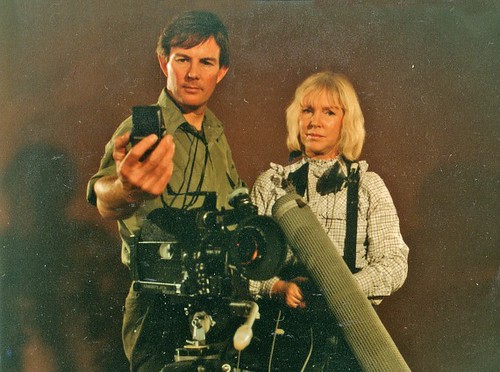
Hands always stuck with me, especially as I later went on to study History and Art History. The nobility of Ireland's rich arts and craft tradition remained as one of my untapped interests. Happily, Lara Byrne, the film programmer at The Model arts centre in Sligo, arranged for some exclusive screenings of the documentary last weekend, with a Q&A with the directors afterward. The weather was a washout, and unfortunately probably deterred a lot of people from attending, but for those of it who determinedly battled our way through the rain to get there, we were rewarded with an intimate Q&A session with the filmmakers, David and Sally Shaw-Smith.
Lara made her decisions wisely. We were treated to two thirty minute long documentaries, one on Rushwork – In Strokestown, Co. Roscommon, we see the harvesting of rushes on Lough Ree, curing and making traditional rush baskets and other items (1989). The second, 'Of Bees & Bee Skeps' (1983) – winner of the Golden Harp for Ireland and in the museum of Modern Art Collection New York; this arresting and moving documentary records the traditional work of bee-keeping from making a straw skep to catching a swarm, and extracting honey.
(Chairmaker John Surlis, Wool spinning and an Irish tailor, Images via David Shaw-Smith)
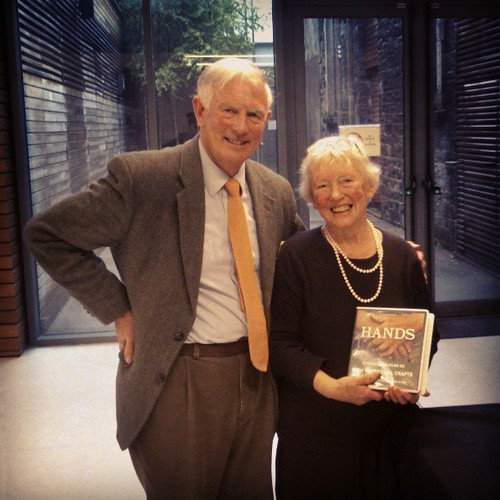
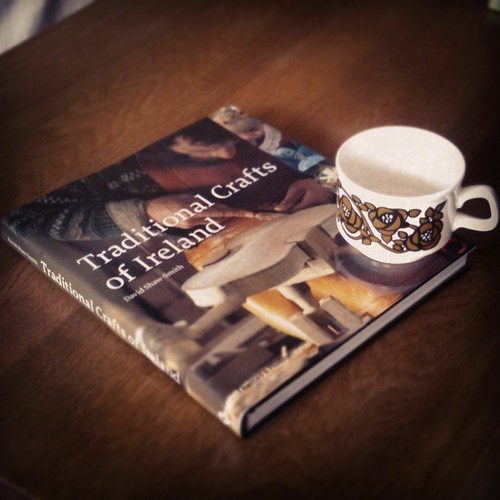
I can happily report that after watching these documentaries for the first time in many years on a big screen, the authenticity and intimacy of this series has not dated, even though the fashions have! There are 37 documentaries in all, recorded between 1969 and the late 1980s. I love the easy pace of the documentary, reflecting the pace of life in the countryside in which it was filmed. There were a couple of narrators as far as I remember, but the easy, familiar tone of hs voice still is most comforting. I decided to save up to buy the 15 disk complete Hands series at Christmas, but I did purchase a copy of David's beautifully illustrated compilation Traditional Crafts of Ireland. David and Sally kindly signed it for me, and it is now resting on my beside locker, for me to look through before bed each night!
'Imbued by a sense of urgency to record crafts in their natural surroundings before they disappeared completely, David and his wife Sally, under contract to RTÉ, travelled the length and breadth of Ireland and it’s islands to assemble this important collection of 37 films on traditional Irish crafts and lifestyles, where the emphasis is on the skills of human hands rather than on machines.'
PS. 'In Good Hands' will be a six-part series revisiting some of the families of craftspeople featured in the original 'Hands' series, I believe it is screening on Rte this Sunday.
SeaTrails is a new initative that has recently begun in Sligo, founded by a Sligo-based maritime archaeologist, Auriel Robinson. Seatrails offer a range of guided tours throughout Sligo, focusing on the history, geology and archaeology of the landscape we are so familiar with.
(Excuse my unashamed use of phone photos throughout this post).
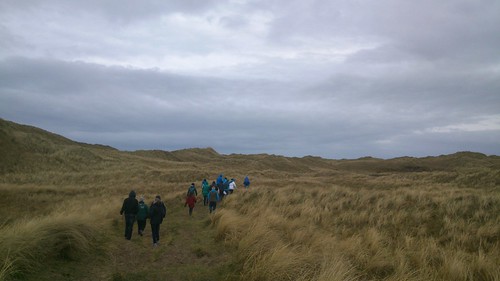
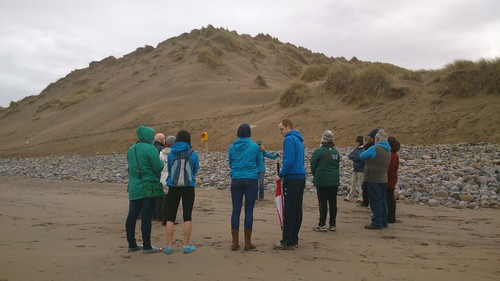
On Saturday, we assembled at 8.15am, by the canon on the Strandhill promenade. The wind coming in from the ocean certainly banished the sleep from our eyes, and we were eager to get moving to warm ourselves up! Auriel began with a brief history of Strandhill village. Where the popular Shells café and Voya seaweed baths now stand, there was once nothing but sand dunes here, until the close of the 18th century.
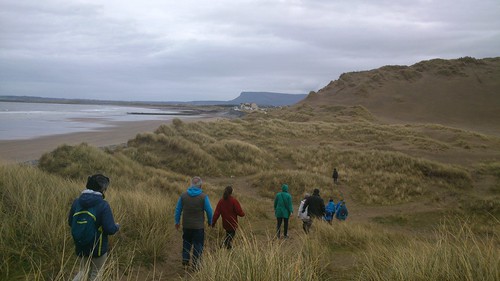
We made our way down to the main beach. Along the way we heard about the coastal erosion of the beach, and spied for fossils amongst the rocks on the shore, relics of the 350 million year old sea bed from which they came. Auriel then guided us into the dunes of Strandhill, down to the Shelly 'valley', a large area amongst the dunes, sheltered from the wind, with millions of shells underfoot, blown down from the grasses of the dunes, that serve as a rich food source for all sorts of wildlife.
Auriel transported us back to the Ice Age, where in the shadow of Knocknarea, we learnt about how the landscape was forever altered by the path of glaciers. Our (Paleolithic) hunter-gatherer ancestors settled here for the rich sources of trout and shellfish. As they lived in huts, little evidence of how they lived day-to-day survives. Dotted along the mountains that surround Sligo, are the highest concentration of megalithic tombs in the world, and the second oldest megalithic tomb in Europe. There's was so much to take in that I couldn't repeat it all verbatim, you'd have to be there!
At 9.30am we returned for a 'walkers' breakfast at Shells Cafe, there was home made scones, jams, muesli, and orange juice served with freshly brewed coffee.
SeaTrails offers locals and tourists the opportunity to lean more about the nature and archaeology of the environment which we co-habit with hundreds of wildlife. Learning why certain things are the way they are in our landscape, from such an educated and enthusiastic guide was a great start to the long weekend. SeaTrails have a whole range of tours around Sligo, and also take group bookings. Visit their website to find out more.
Afterward we popped into the Sligo Farmer's Market, which also runs on Saturday, selling fresh and organic produce for your Saturday and Sunday lunches!
A couple of weeks ago, Maeve and myself made good on our pact to visit Glasnevin Cemetery. I bought a Groupon coupon for discounted entry a few months ago, which I thought was a good way for Glasnevin Museum to generate visitor footfall. They're selling Groupon tickets at the moment too. The skies remained a clear, deep blue for the duration of our visit, we were blessed with the weather!
On April 24th, 1916 the Easter Rising began in Dublin city, and lasted for 6 days, fiercely fought by the Irish Republicans who wanted to emancipate Ireland from British rule. In the end there were casualties on both sides, and Ireland wouldn't achieve its independence until 1922. Some of the most famous figures of the Rising, assassinated for their part in the Rebellion, are buried here at Glasnevin cemetery.
Glasnevin Cemetery is Ireland's largest non-denominational cemetery, established in 1832 by Daniel O'Connell "The Emancipator". The Penal Laws operating in Ireland at the time prevented Catholics from practising their religious rites publicly. Many Catholics could not afford to bury their dead in consecrated ground. O'Connell sought to redress this state of affairs. Now over 1.5 million of over 12 different faiths are buried here, death being the great equalizer.
Our tour lasted a little over an hour, they have two public tours every day at 11.30am and 2.30pm, and on different days you are treated to a historical renactment of a particular event at the cemetery. When we were there, we were presented with a renactment of Padraig Pearse’s graveside oratory at the funeral of the FenianO'Donovan Rossa, in 1915. It was a bit naff, but its probably a good crowd pleaser, and does set the context, particularly if your memory is a little rusty on twentieth-century Irish history. It did put us in the mood for the rest of the tour. Our guide was Niall and he had a special association with the Rising, through his grandfather, who had gotten involved as a volunteer at the age of 15.
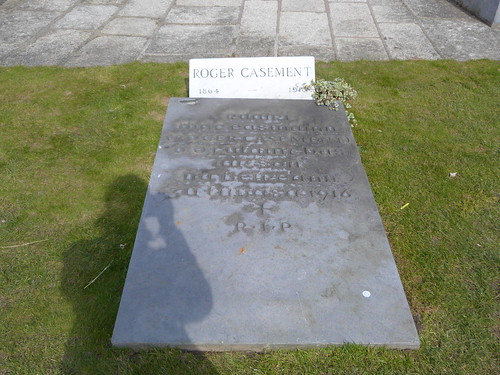
Roger Casement was one of the first graves we stopped off at. Casement was an Irish nationalist, anti-imperialist and abolitionist. He was stripped of his knighthood, and executed for treason on August 3rd, 1916, for his involvement in the Easter Rising, this judgment is said to be strictly enforced due to the recent discovery of Casement's "black books" which revealed his homosexual activities.
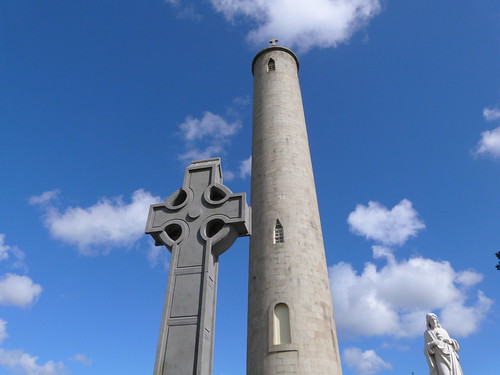
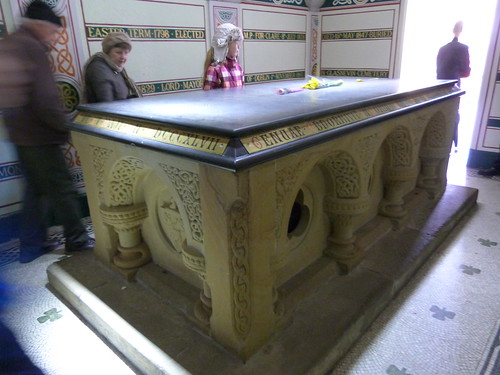
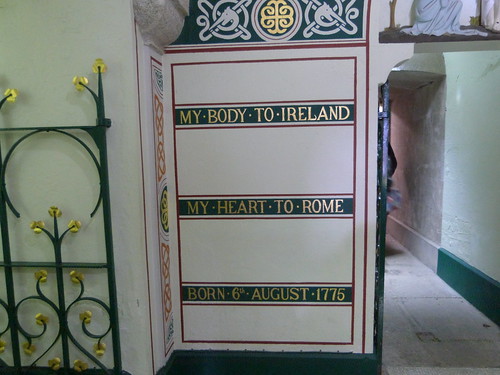
We were taken into the O’Connell family crypt underneath the round tower. Visitors were once able to climb the tower, until an Loyalist bomb was planted there in the late 1970s, which destroyed the staircase. The Glasnevin Trust is a registered charity, so they rely heavily on visitor income and fundraising. They hope to reinstate the staircase inside the tower at some point in the future. The crypt was recently refurbished, in 2009. The quotations on the wall are said to be O'Connell's dying words; "My body to Ireland, My heart to Rome", which was taken literally, as his heart was taken to what was then the chapel of the Irish College there, now the Sant'Agata dei Goti.
O’Connell’s coffin takes centre stage once inside the crypt. The macarbe part of me got a thrill at seeing O’Connell’s coffin, which is visible through the marble tableau above it. The interior has undergone a recent restoration with bright murals painting on the walls, outlining key dates in O’Connell’s life.
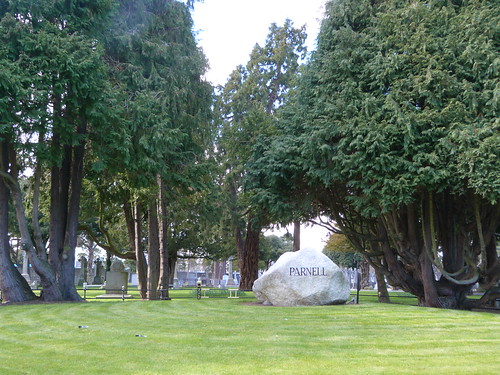
Afterward we went to where Charles Stewart Parnell is buried, above the cholera pit. Popular legend speaks of how one of his dying requests was to "bury me with my people", which was honoured, whether this is true or not.
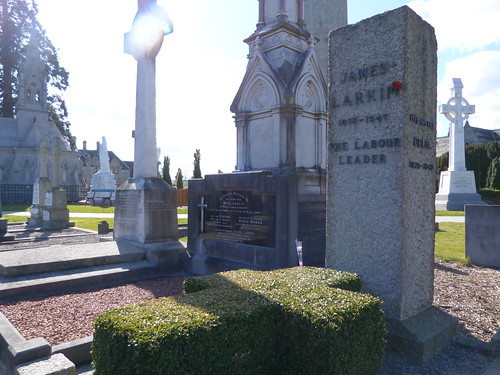
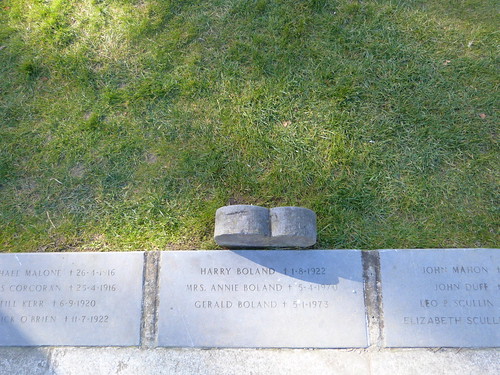
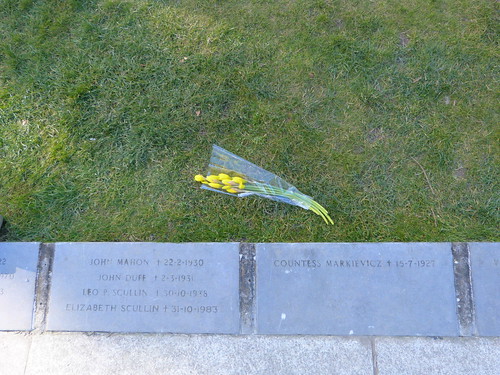
On the final leg of our tour we were brought to the Republican plot, where the names are so familiar to all of us who’ve come through the Irish primary school system. The plot is simple and unadorned, the grave markers recording only their name, and the dates of birth and death. A young boy was very enthusiastic about this part of the tour, I could empathise, having had an appetite for Irish history when I was in school myself (and retain to this day may I add!). I would love to see more little girls express the same interest, perhaps if the Women of 1916 were celebrated more (watch this space!).
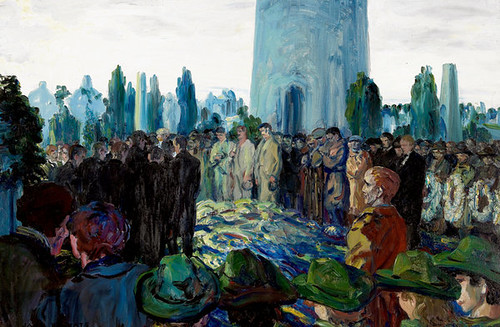
The Funeral of Harry Boland (1922) by Jack B. Yeats. Harry Boland, an Irish nationalist, was a member of the First Dáil. Boland joined the Irish Volunteers and took an active part in the Easter Rising of 1916. Boland was Michael Collins best friend and right hand man, but their friendship was strained as Boland opposed the Anglo-Irish Treaty. In November of 1922, Boland was accosted by soldiers of the Irish Free State Army at a hotel in Skerries, and though he was unarmed, he was mortally wounded and later died from his injuries. At his burial in Glasnevin, no press nor photography was permitted, and thus Yeats' painting is the only pictorial evidence of this event. This painting is held in the Niland Collection at The Model, Sligo. I had the pleasure of speaking on this work during some summer tours of the gallery I gave last year. You can see the base of the O'Connell monument (as in my first photo) in the picture.
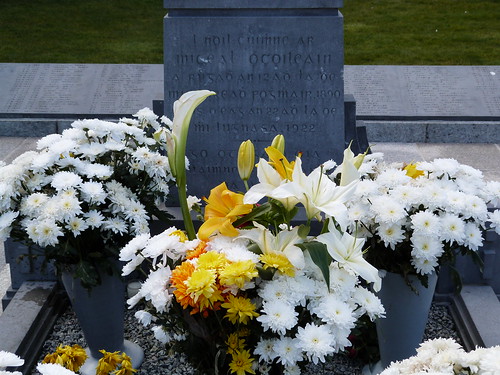
Michael Collins grave is the most visited grave in Glasnevin, unsurprisingly as it is set apart from the others, close to the Glasnevin Museum building. Personally I wasn't a fan of its position, I'd like to have seen Collins' grave beside his contemporaries. Set apart from the others, the sensitive side of me sorry for the grave, alone.
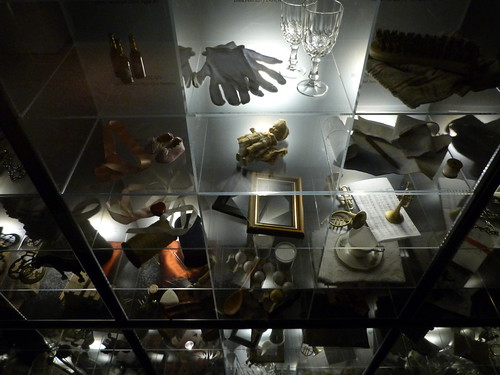
The Museum is contained in the basement, and is eerily enjoyable, it includes some quirky coffin seating in the interactive cinema and models of gravediggers, as well as some excerpts of recorded conversations between Glasnevin Gravediggers in a local pub. The mood remains dark and contemplative. There are interactive panels that explain in an intelligent but understandable manner, the philosophies of each of the religious faiths that are buried here. A series of display boxes includes the names of some of those interred there and some items associated with them during their life.
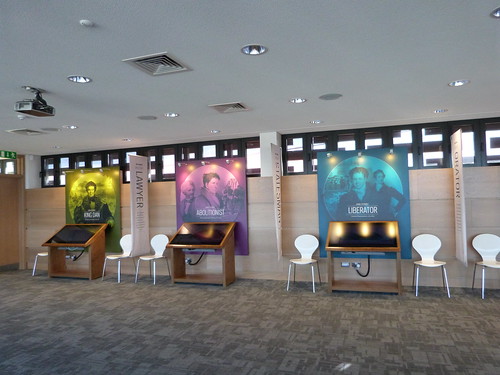
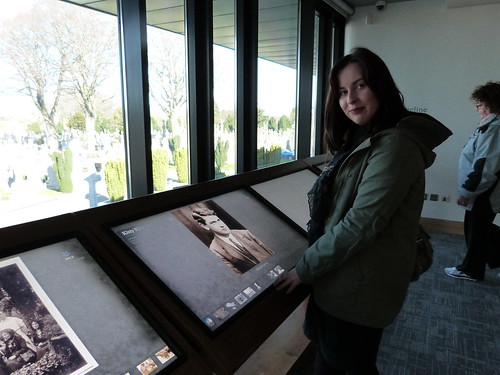
The museum continues upstairs with an interactive exhibition, and a small display of some O'Connell memorabilia. You can browse through the interactive exhibits and learn about the famous 'residents' of Glasnevin. I like that you have a view of the graveyard in front of you as you do this, a reminder of past, present, and future.
Glasnevin Museum have a strong social media presence and you can intereact with them on twitter, facebook and instagram.
Getting to the cemetery from the city centre is very simple, you can get Dublin bus 140 from O'Connell Street, a bus ticket is around €2.20.